
Designing a flexible money market

How we designed a crypto money market that’s clear, direct, and easy to use on multiple blockchains at once.
Balanced’s flagship feature has always been the stablecoin loan.
Deposit crypto as collateral, then borrow the Balanced Dollar (bnUSD) for 2% interest.
When it launched in 2021, you could collateralise one asset on one blockchain. Over time, we added support for additional collateral types. And in 2024, we upgraded the interface to support cross-chain loans.
But in 2025, we learned that core changes to our team and technology stack would make the stablecoin loan obsolete. A money market would soon take its place.
The money market would have broader appeal than our stablecoin loan. You could supply crypto to earn interest, and if you chose to borrow, bnUSD would be one of many cryptocurrencies at your disposal.
We shipped our first money market in 2021, but it was limited to a handful of cryptocurrencies on a single blockchain. The Balanced money market would have dozens of both.
Many money markets support multiple blockchains, but none of them are good.
So we challenged ourselves to make the most flexible cross-chain money market on the market.
The cardinal sins of money markets
When we start a new design, we appraise the competition. Not to copy, but to gain context.
We ask questions like:
- How does the feature work?
- What do we hate?
- What should we keep?
- Where can we reduce time and effort?
Then we set out to design the definitive version.
We reviewed Aave, Compound, and at least 15 other money markets. Not a single one impressed us.
Here are some of the problems we flagged:
- Single-chain focus.
Money markets limit you to a single blockchain at a time, even if they support many. You can’t view or manage your positions across every blockchain at once, and you have to click around every chain to find out where your money is. Want to borrow an asset on another blockchain? Forget about it.
- Too many pages.
Most apps push you to a new page for every action, where you no longer have sight of the information that compelled you to act. Every page switch requires mental effort to assess the new information in front of you, while you try to keep the details of your task clearly in mind.
- Too many details.
It’s easier to add than to prune, so most money markets don’t even try to limit the information they present. With so many pages, they have room for it all. But this makes it hard to know where to look. The signal gets lost in the noise.
- Too much complexity.
Most money markets are dense with data and jargon. Even when presented well, complex details make an interface feel daunting.
Whether it’s acronyms like APR, APY, and LTV; the concept of a Health Factor to track risk; or charts filled with data that means nothing to all but advanced users; every detail that raises a question in your mind forces you to slow down and think hard before you can move forward.
- Too hard to get started.
Money markets often surface actions you’re not ready for, and expect you to be an expert the moment you arrive. It can be hard to know what to do next without falling back on a tutorial, a clear sign that the app has failed its users.
- Too business-focused.
Many money markets blur the line between product and marketing. If they list a new market or run a promo, they’ll do everything they can to make you aware of it. Badges, banners, pop-ups, and chatbots compete for your attention at every turn.
Dissatisfied with the state of money markets, our mission was clear:
Design a flexible foundation
To create a single-page money market that works across every blockchain at once, we needed an interface that was flexible at its core.
Blockchain-asset organisation
The original Balanced loan prioritised assets over blockchains. It used an isolated-collateral model (you could only use one asset to back each loan) so it was easier to choose which asset to use, then pick the chain. To do the opposite would turn the chain into a filter, so you’d never see the full list of supported collateral types.
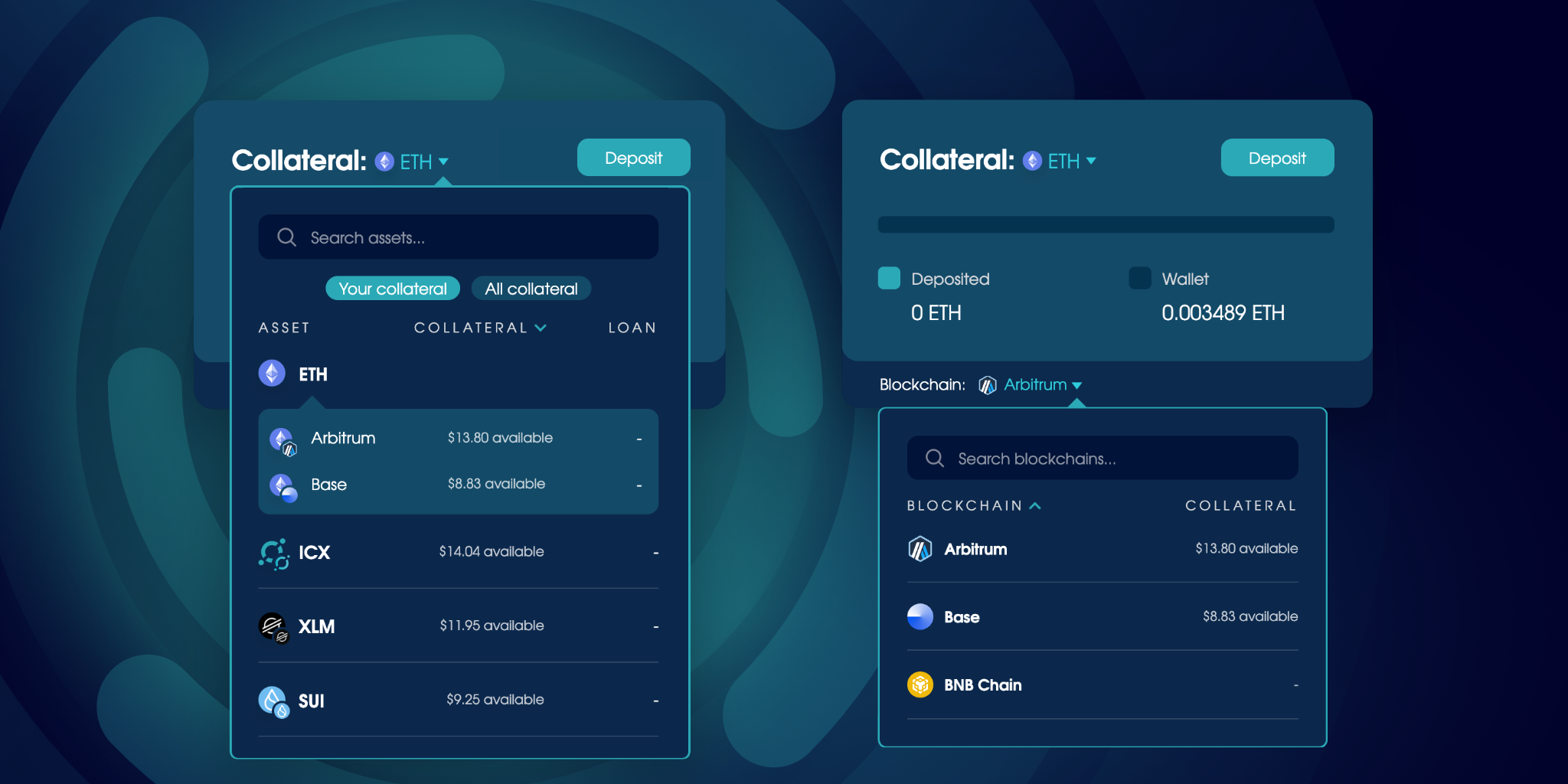
But money markets are multi-collateral (you can use every asset supplied on a specific chain to back a multi-asset loan), so now we had to prioritise blockchains over assets.
Money market apps like Aave support multiple chains and assets, but they limit you to one blockchain at a time so you can never see everything at once. You have to play detective and click through every chain to see where your money is — and whether it’s at risk.
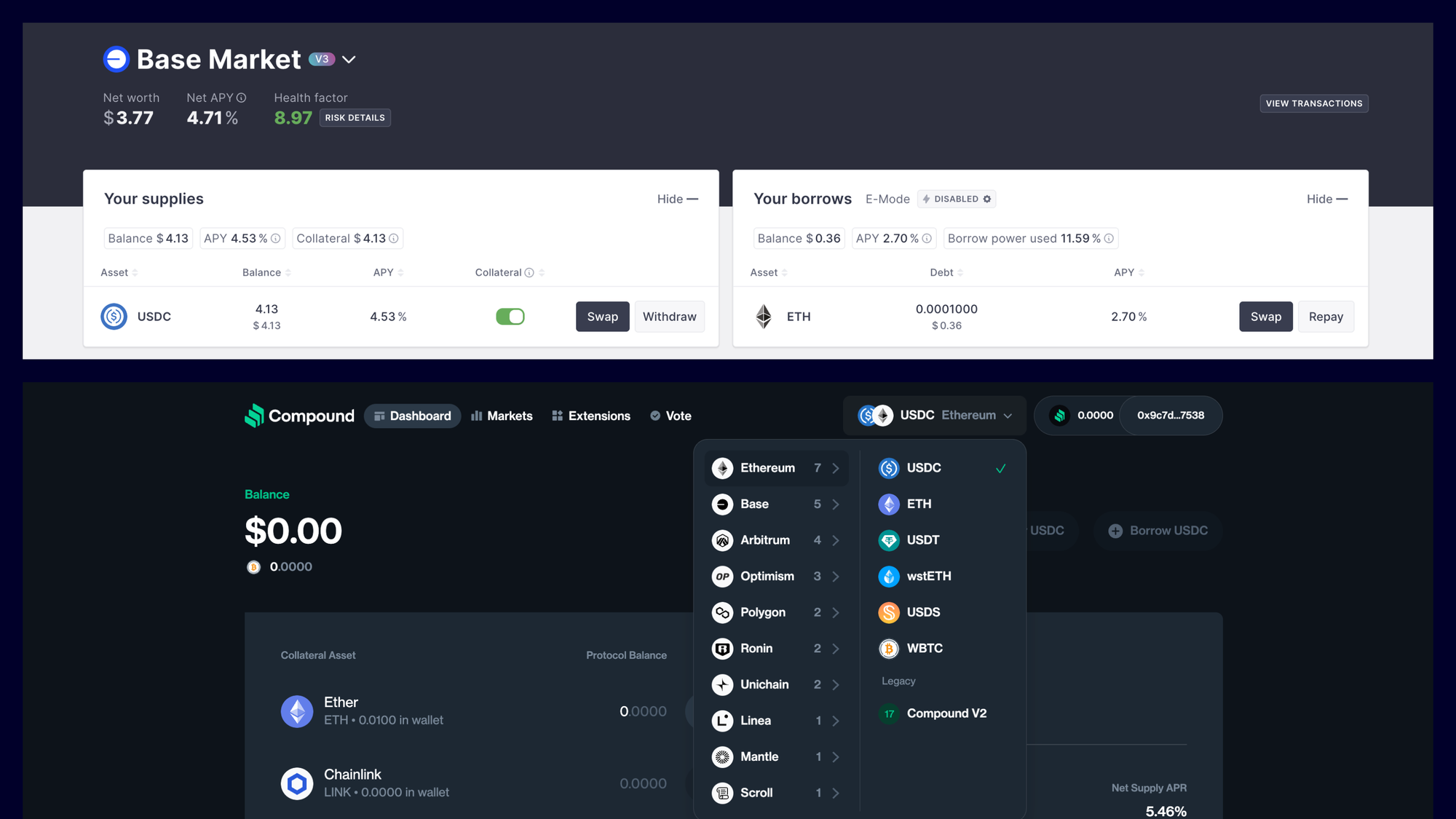
Each new page costs mental effort that could be spared if everything was on a single page.
Balanced only supports one loan per blockchain, so that’s how we decided to group them.
To provide maximum information at a glance, each blockchain would need a header that contained an overview of your position.
But what details should we include? Supplied. Borrowed. Risk. Interest rates. Rewards. Available to supply & borrow...
If everything is a priority, nothing is.
We cycled through countless variations, adding and rearranging potential data points.
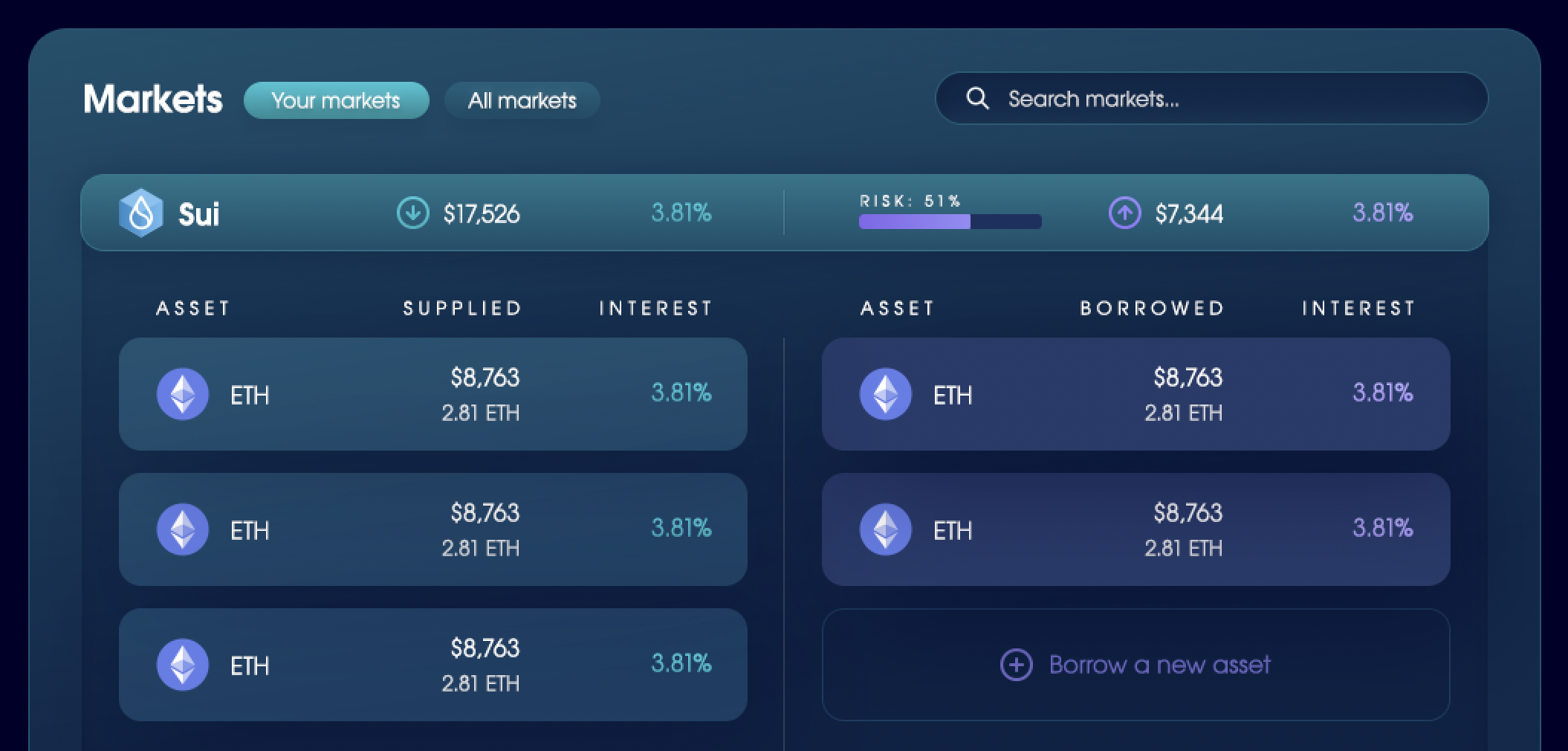
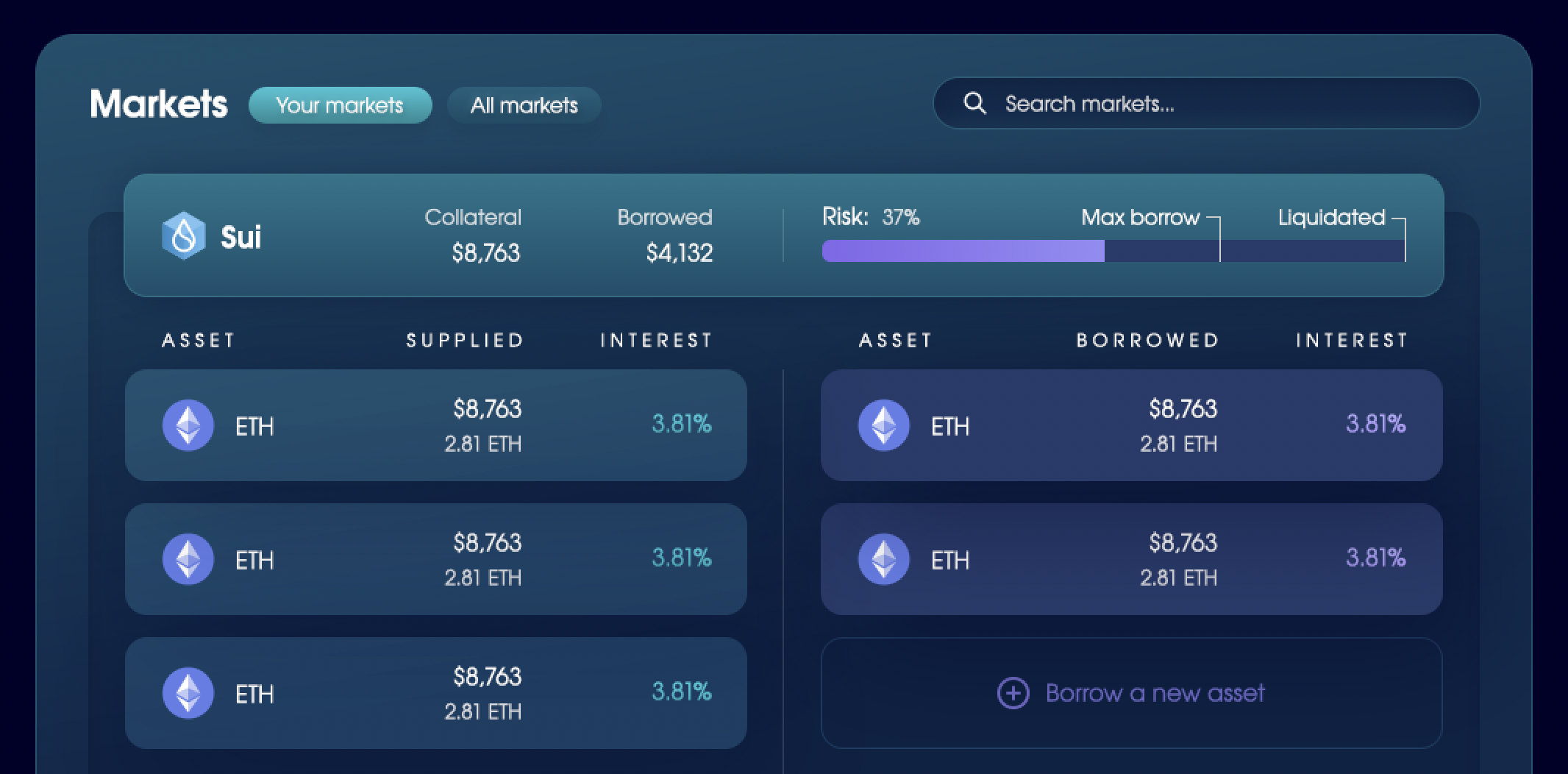
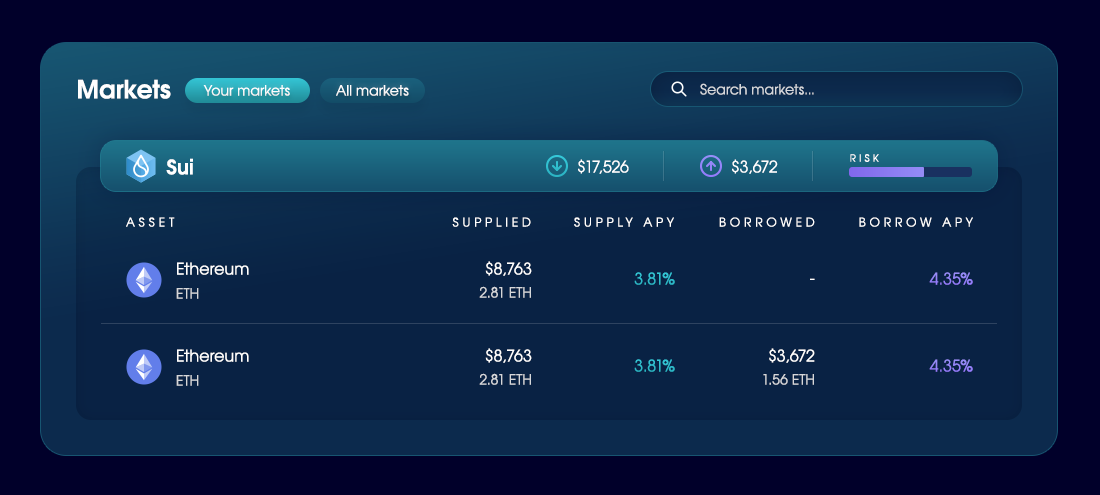
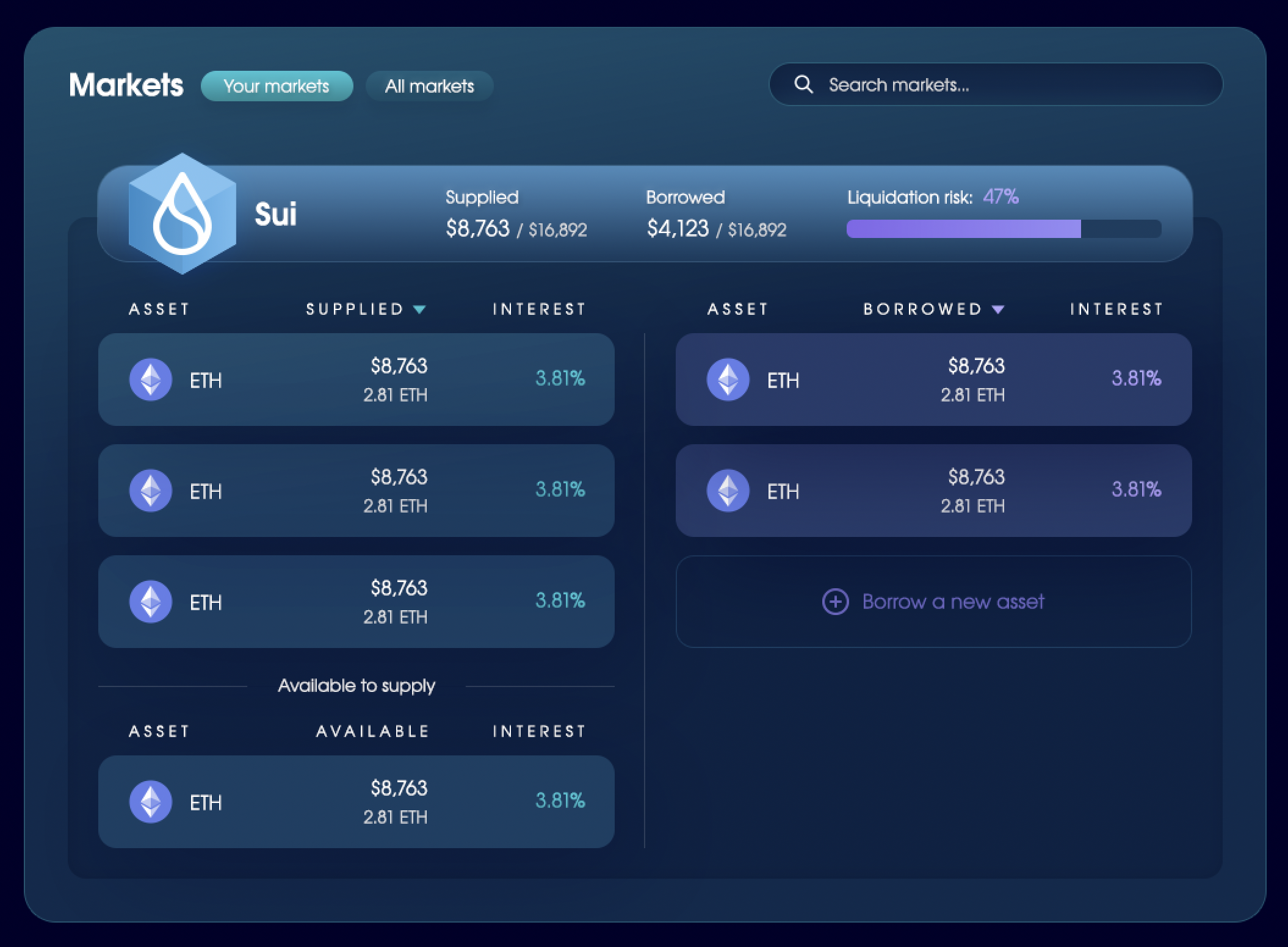
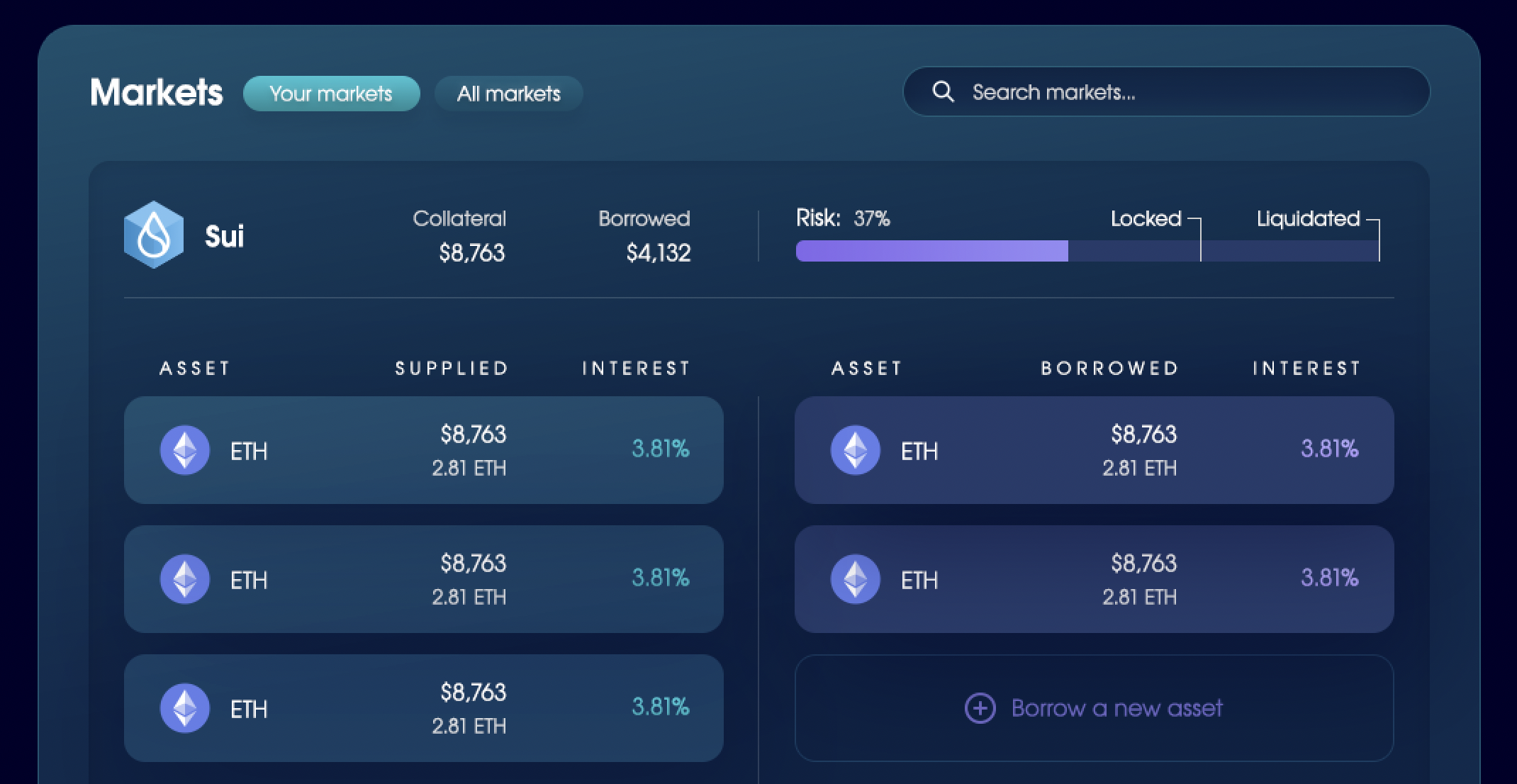
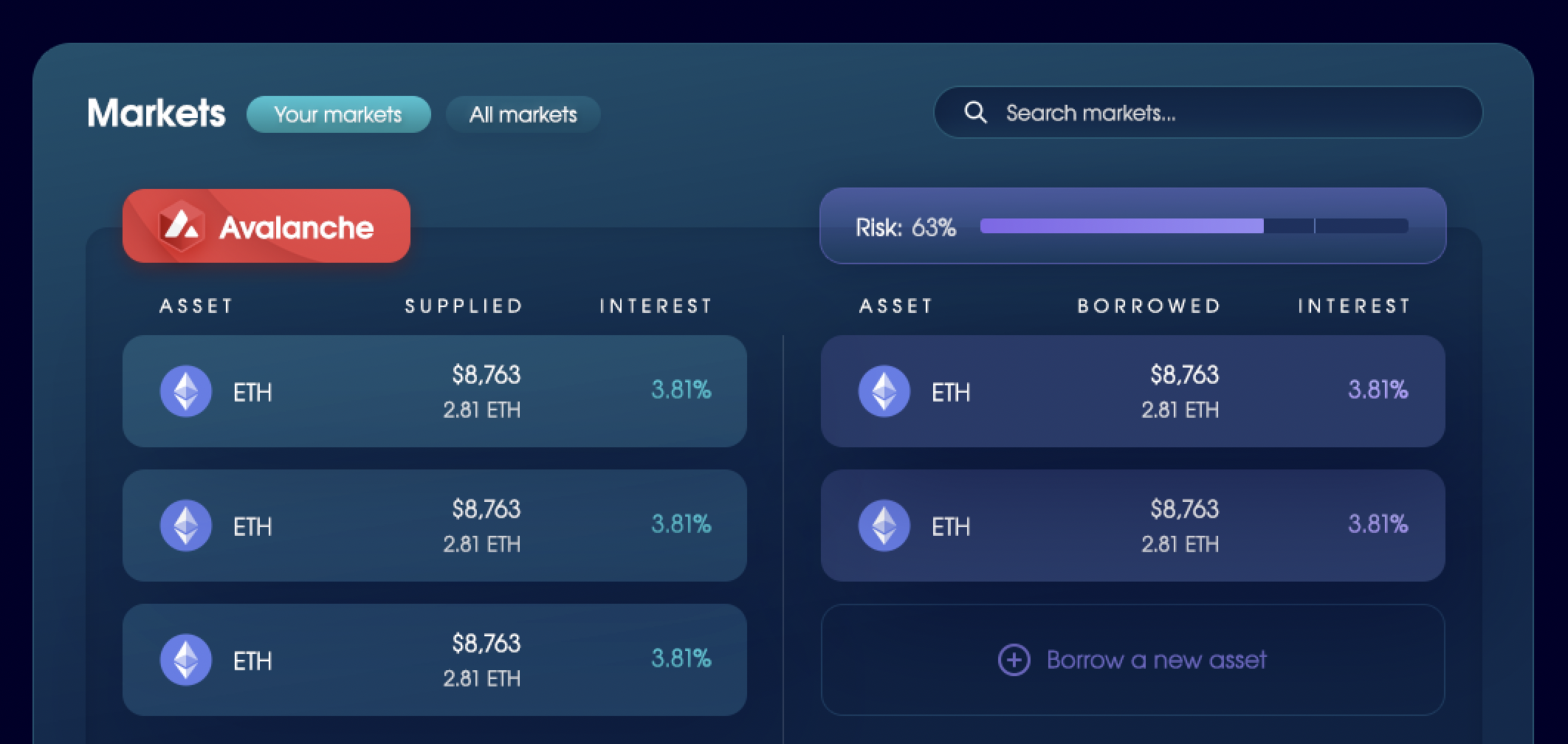
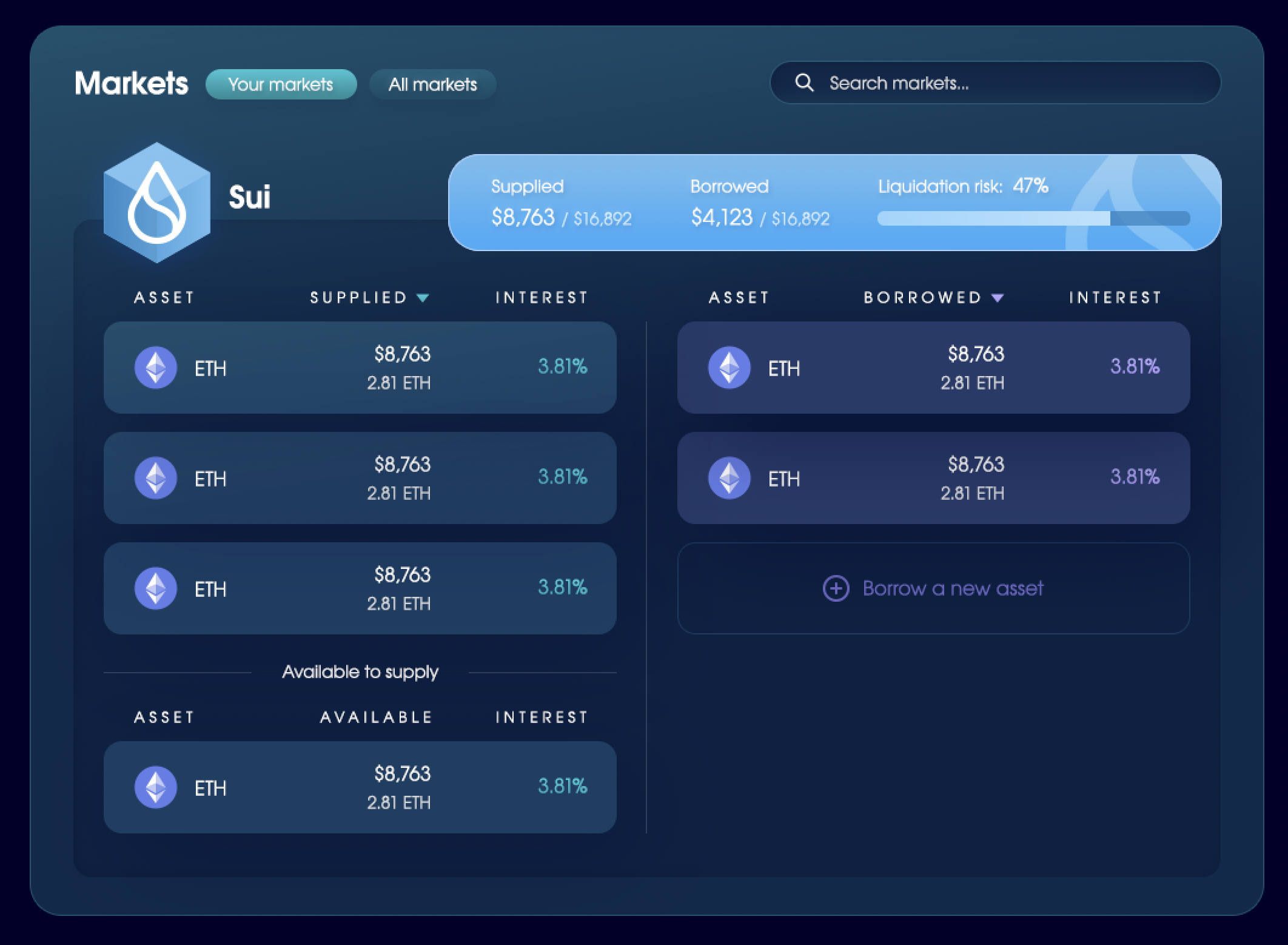
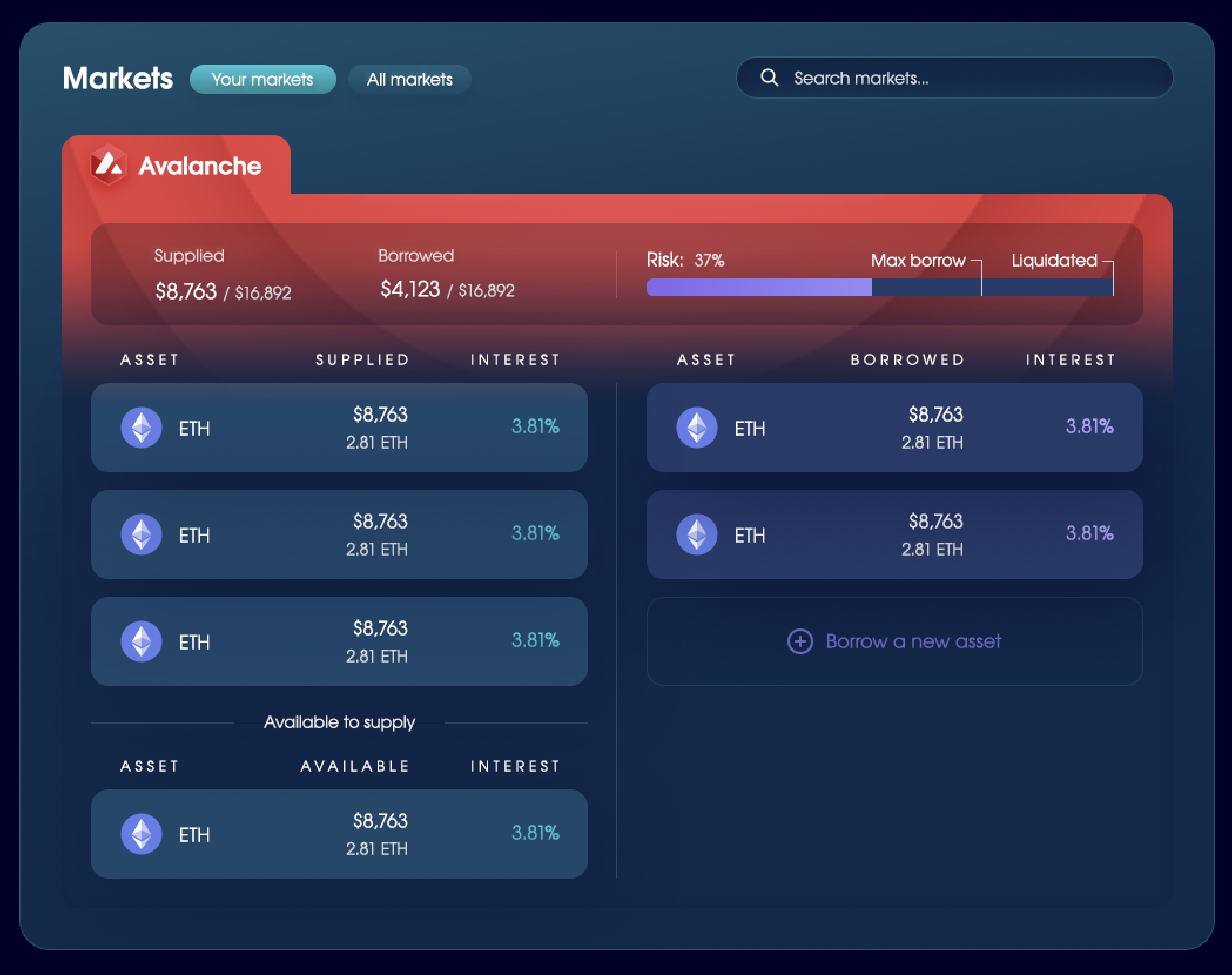
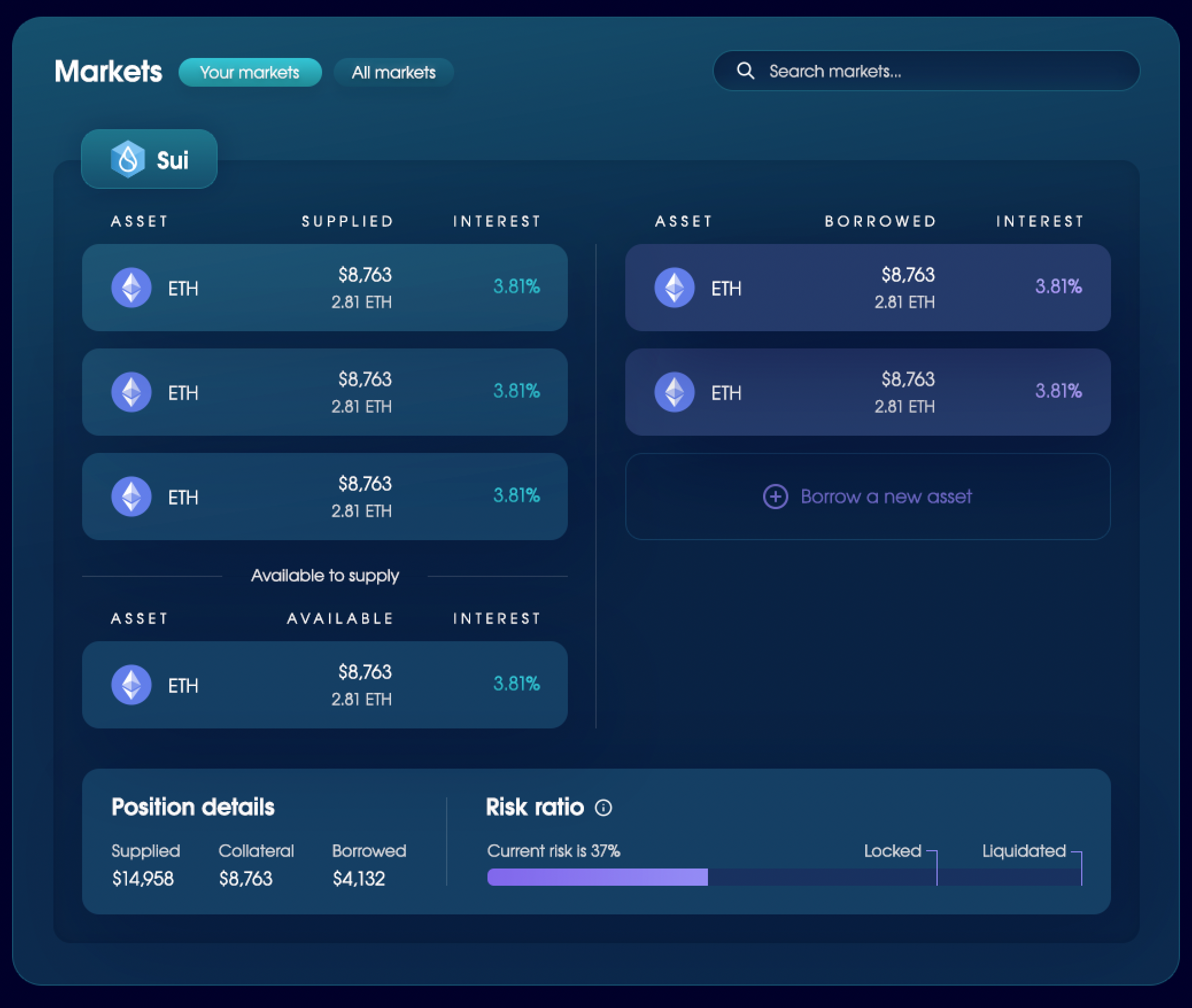
Some of the many blockchain header variations we designed.
Until we eventually landed on a concept that offered maximum understanding and minimal noise:
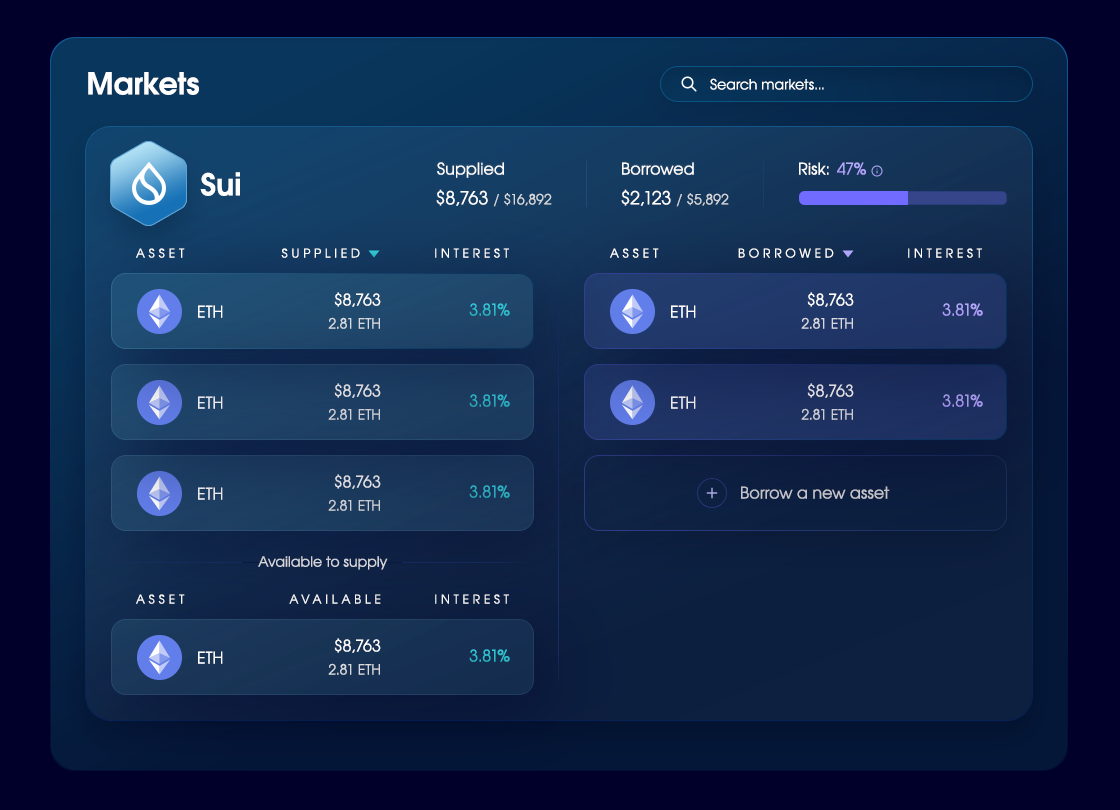
The dual-table layout
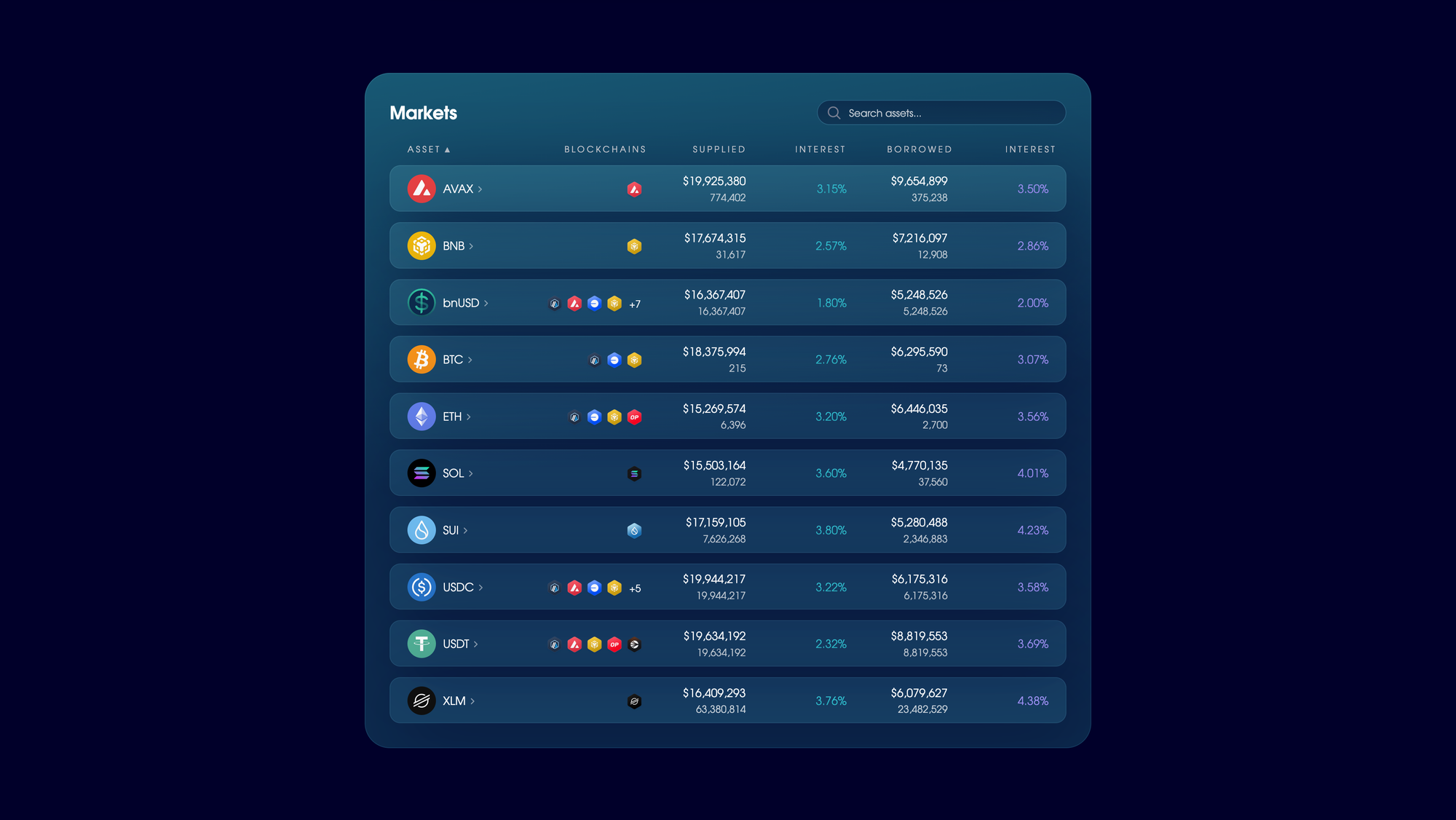
In the signed-out state, you can present every market within a simple table. It’s familiar, easy to scan, and we saw no reason to reinvent it. But we did add a Blockchain column to highlight our extensive cross-chain support.
The signed-in state was more complicated. How could we help people progress from supplying an asset to borrowing one, especially if they wanted to borrow assets on a different chain?
Our Omm money market design made it easy to supply an asset on one side and borrow it on another:
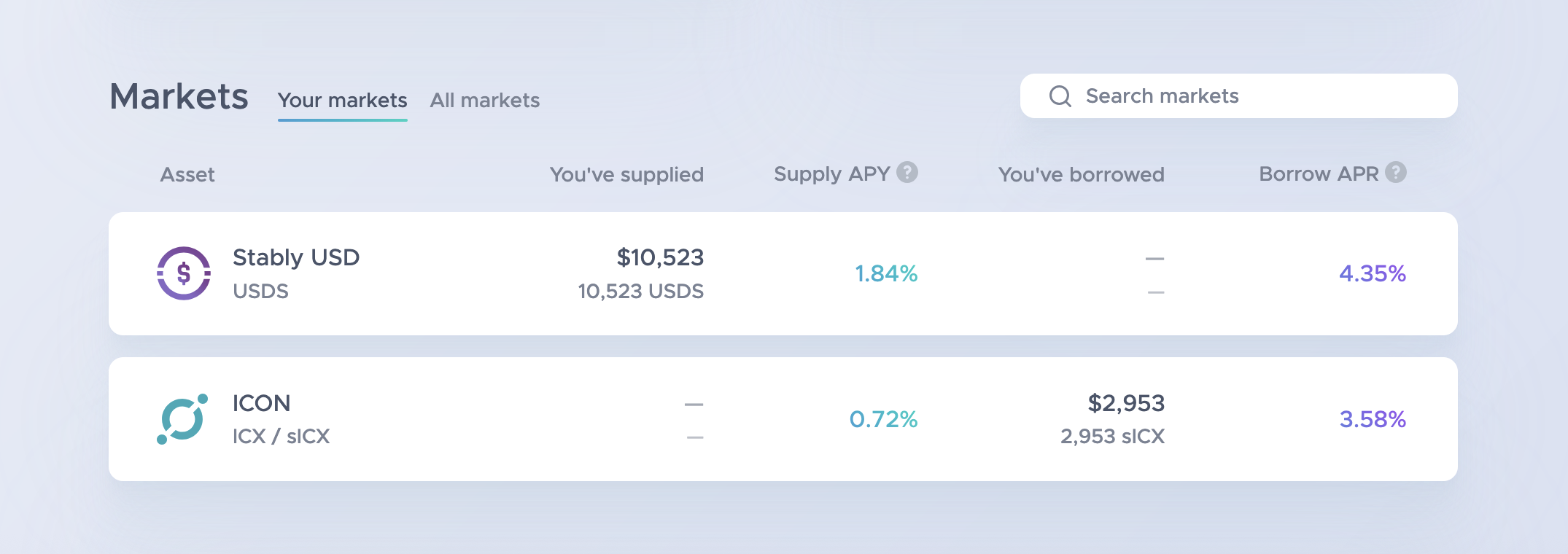
But the Omm design would not provide the focus or flexibility we desired. Your view would be muddied by a list of assets you had no intention of using, and it would be difficult — if not impossible — to borrow assets from other chains.
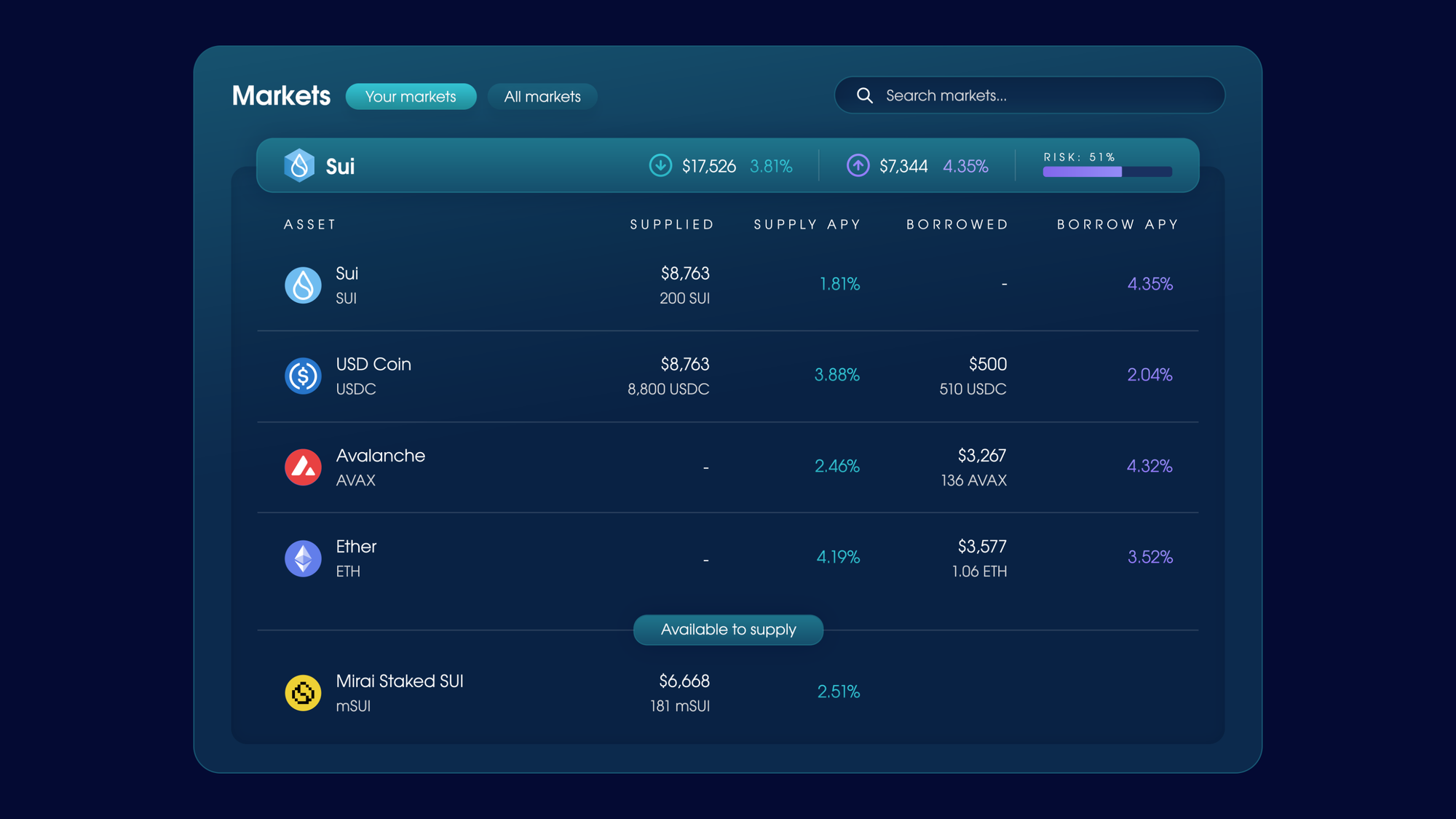
To bring focus and flexibility to your markets, we settled on a dual-table layout — left for supplying, right for borrowing — and positioned them underneath each blockchain header.
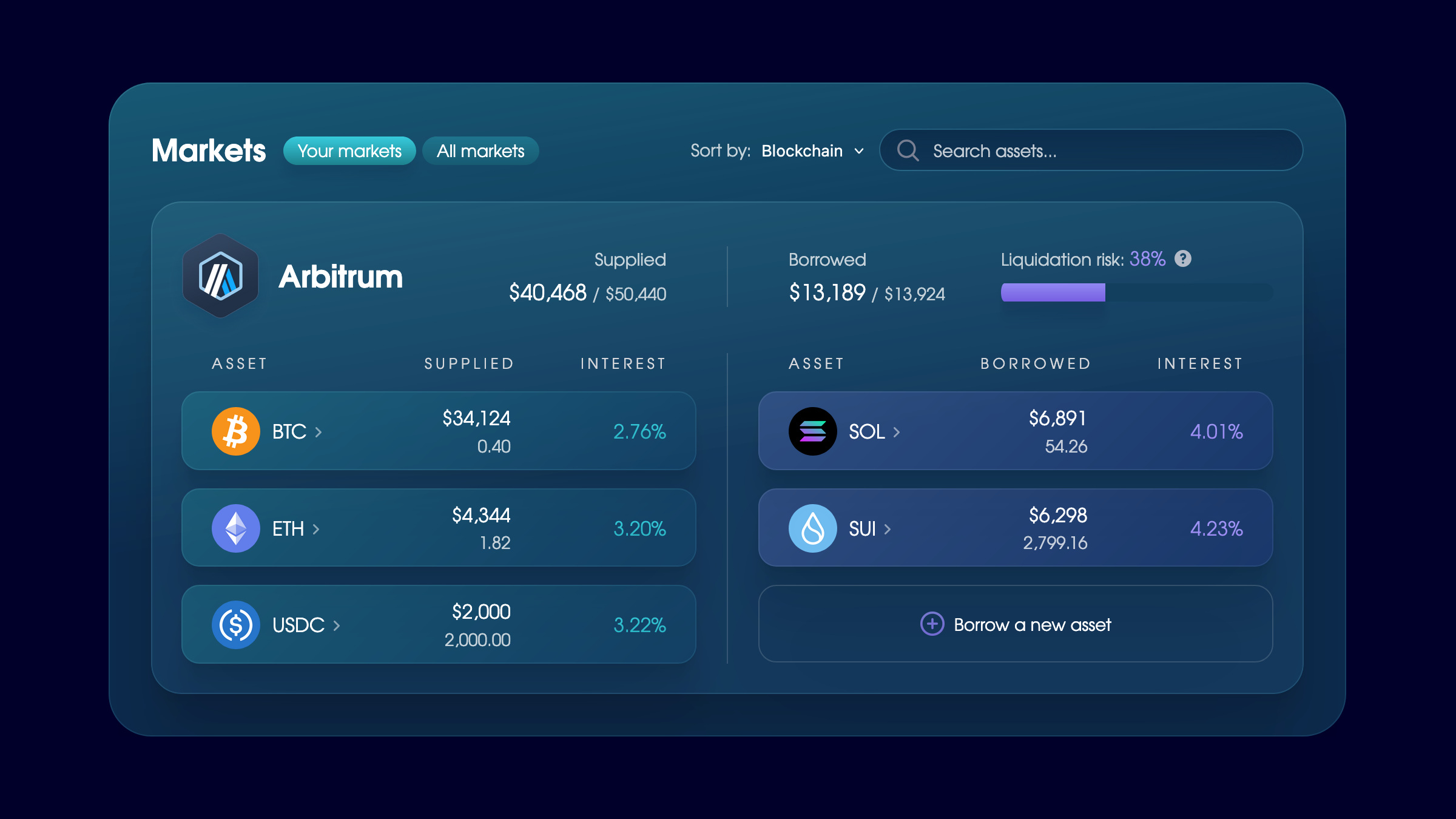
A single decision that immediately unlocked the level of flexibility we were aiming for.
The dual-table layout is easier to scan, reveals every asset you can supply, and helps you borrow across chains without switching your view.
Make risk understandable
Our stablecoin loan included the liquidation price of your collateral. At that price, your risk would be so high that people could repay your debt in exchange for your collateral.
The original Position Details design, with the liquidation price in the bottom left.
But the liquidation price only works if there are two assets — and one of them is stable.
You can use money markets to supply and borrow multiple assets — most of them volatile — so we needed to rethink how to communicate the risk.
Most money markets represent risk with a health factor. Below 1, your collateral gets liquidated. But what does it mean to have a health factor of 5, or 15? How quickly can it change?
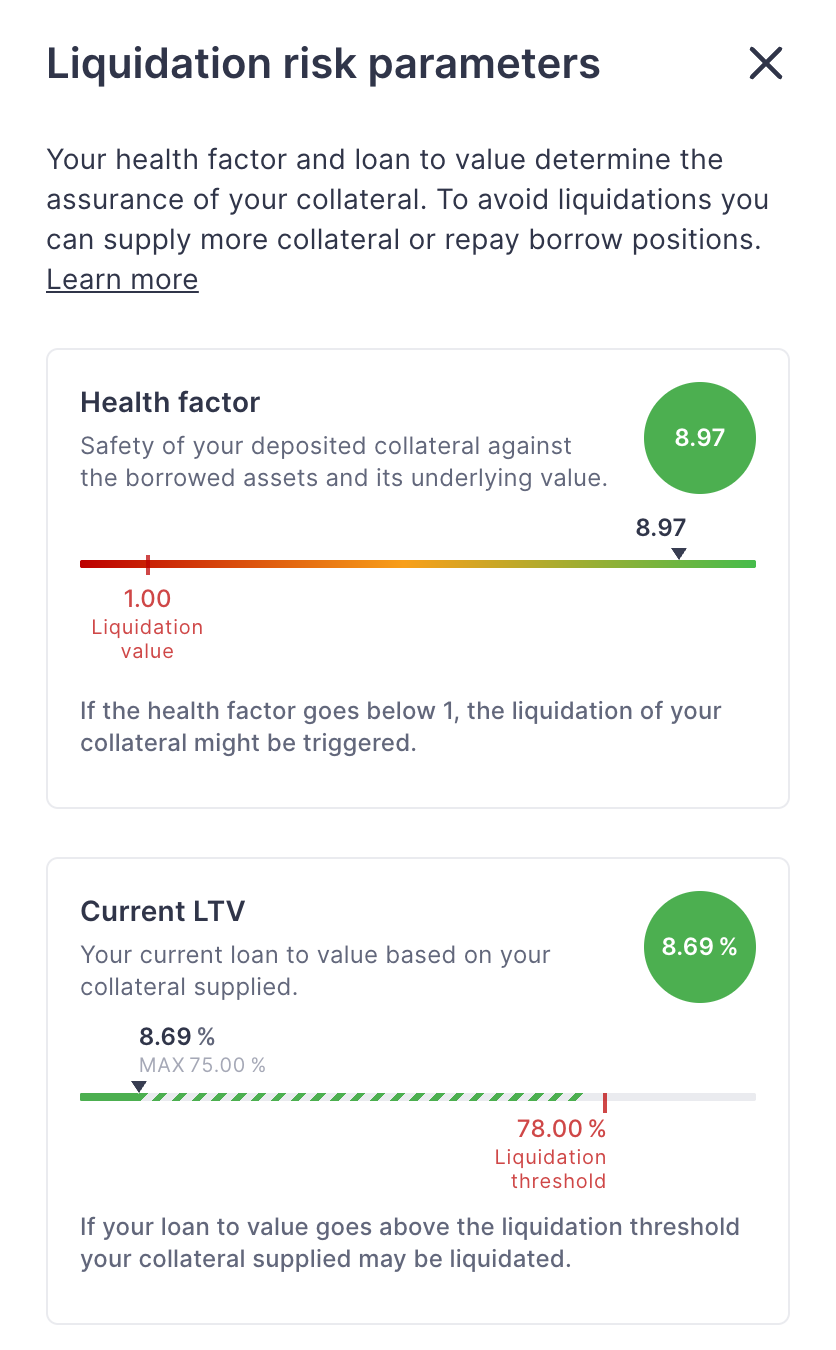
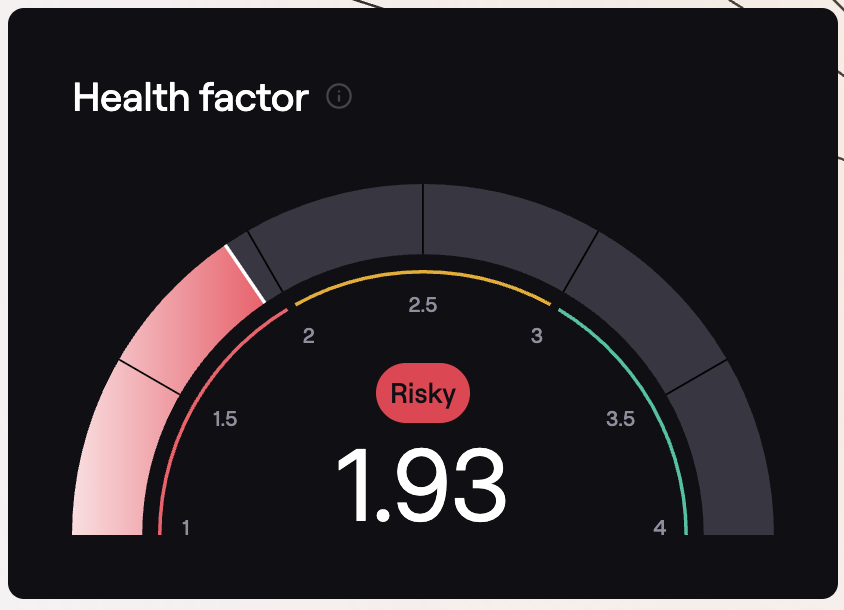
The Health Factor on Aave and Spark.fi, neither of which indicate how much price volatility is required to drop your score below 1.
It’s harder to comprehend because it’s not relatable. You really have to think about it.
A risk from 0-100 % is easier to understand. It’s a scale everyone is familiar with, and it’s how we handled risk for the Omm money market so we know it works.
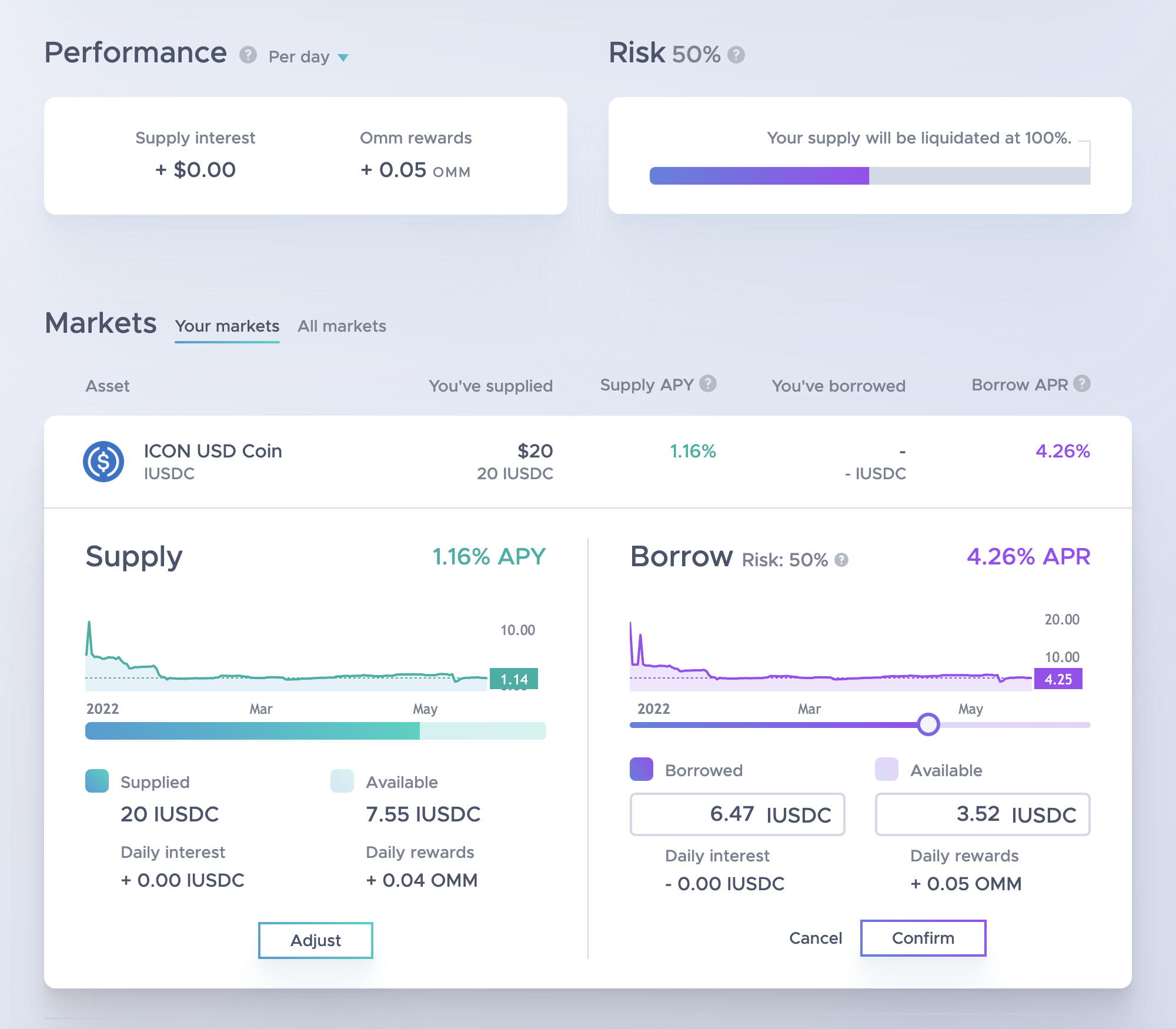
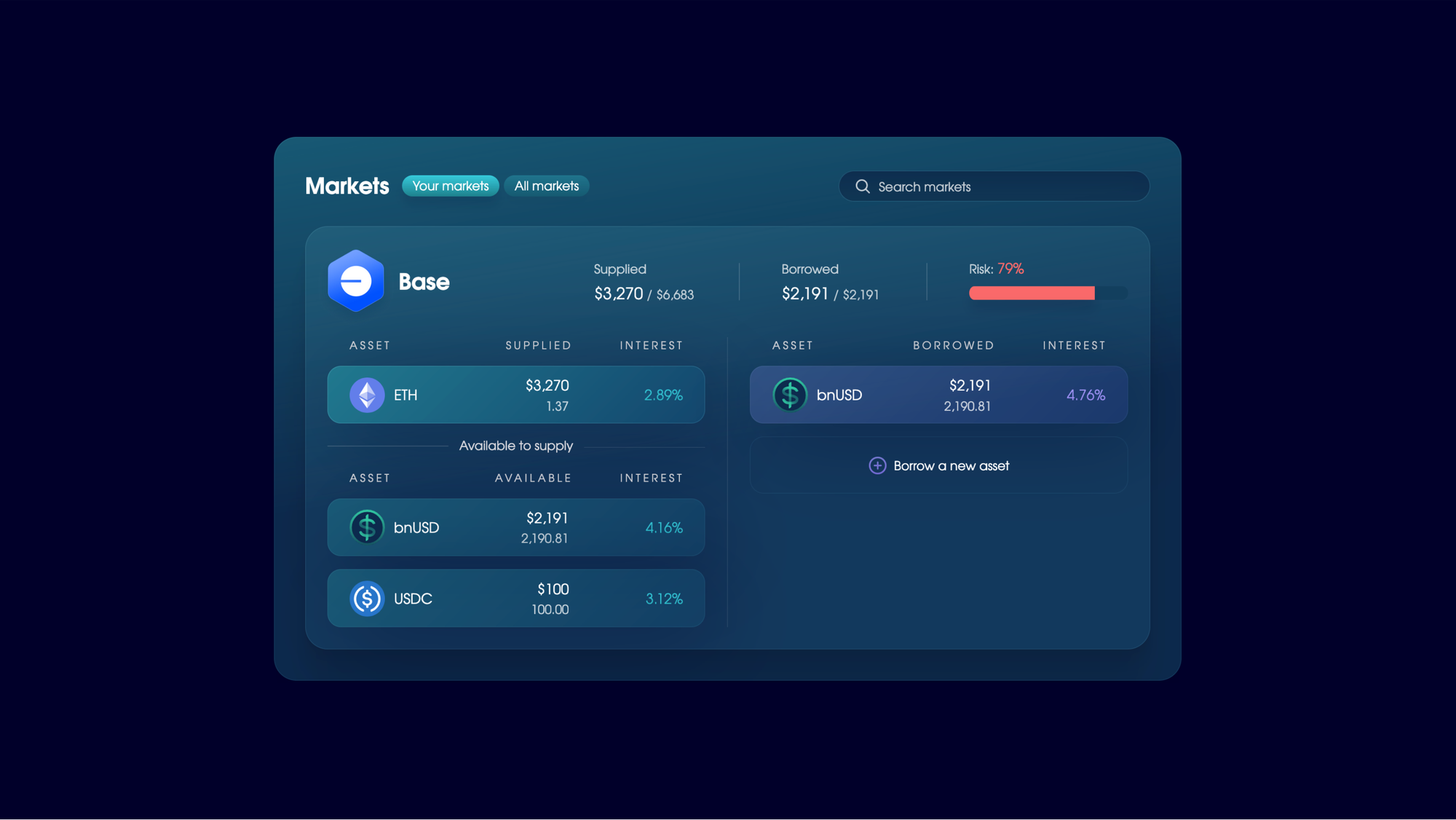
Like Omm, the risk value also changes colour as it increases to communicate caution.
At the maximum borrow threshold, the risk percentage changes from purple to red.
But that wasn’t good enough, so we also included a tooltip to show the percentage your collateral would have to decrease or your loan increase before your funds are partially liquidated.
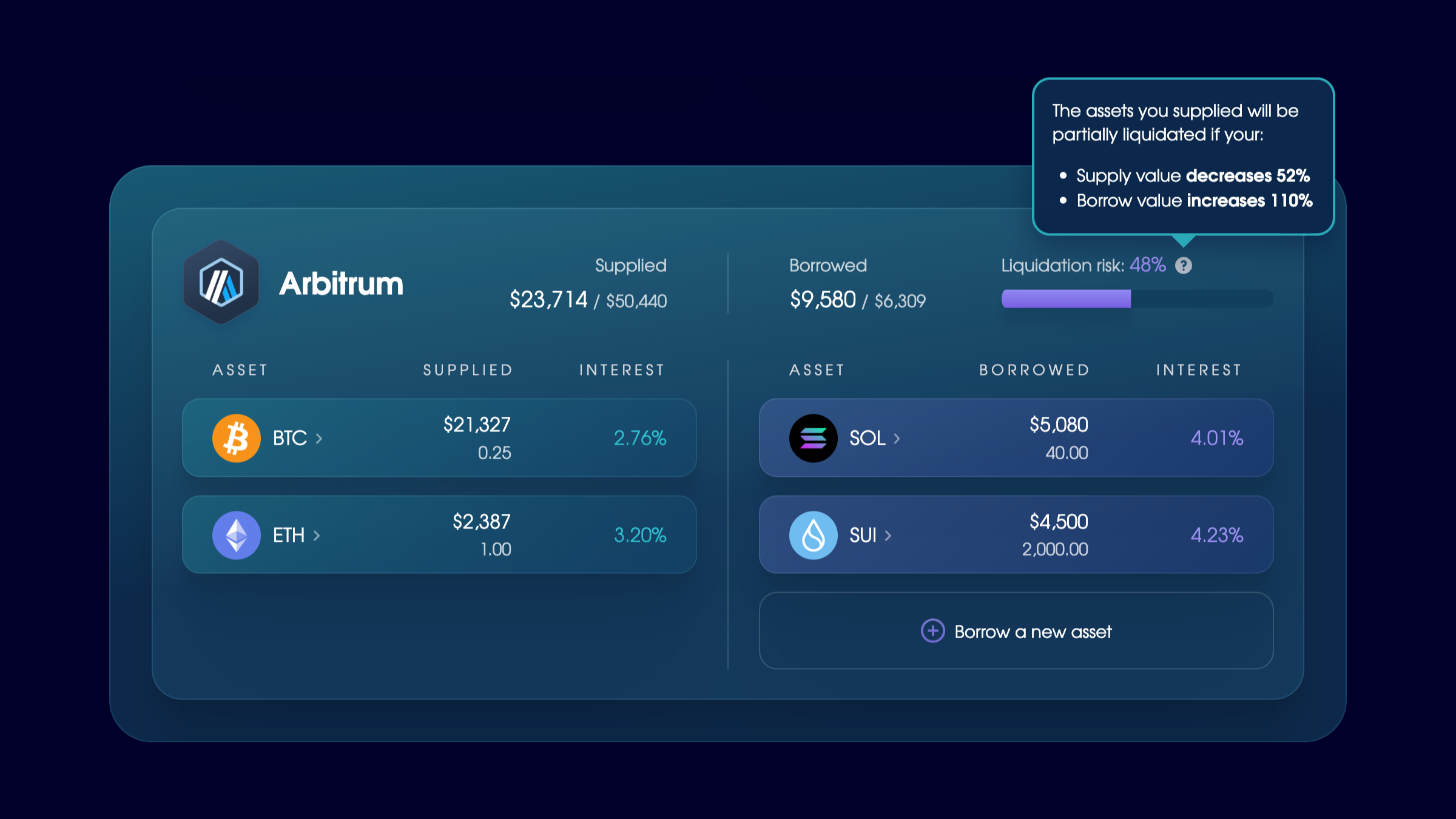
While nothing comes close to the specific price, the percentage change makes it easier to look at a price chart and assess how likely it is that the market will move against you.
Provide context without changing context
Most money markets sprawl across as many pages as they have assets and chains. Each page lacks context of your full position, includes so much information that it’s hard to focus, and forces you to do the math. Every additional page increases your cognitive load and makes it easier to get lost in the middle of your task.
To limit our money market to a single page, we made every market expand in place.
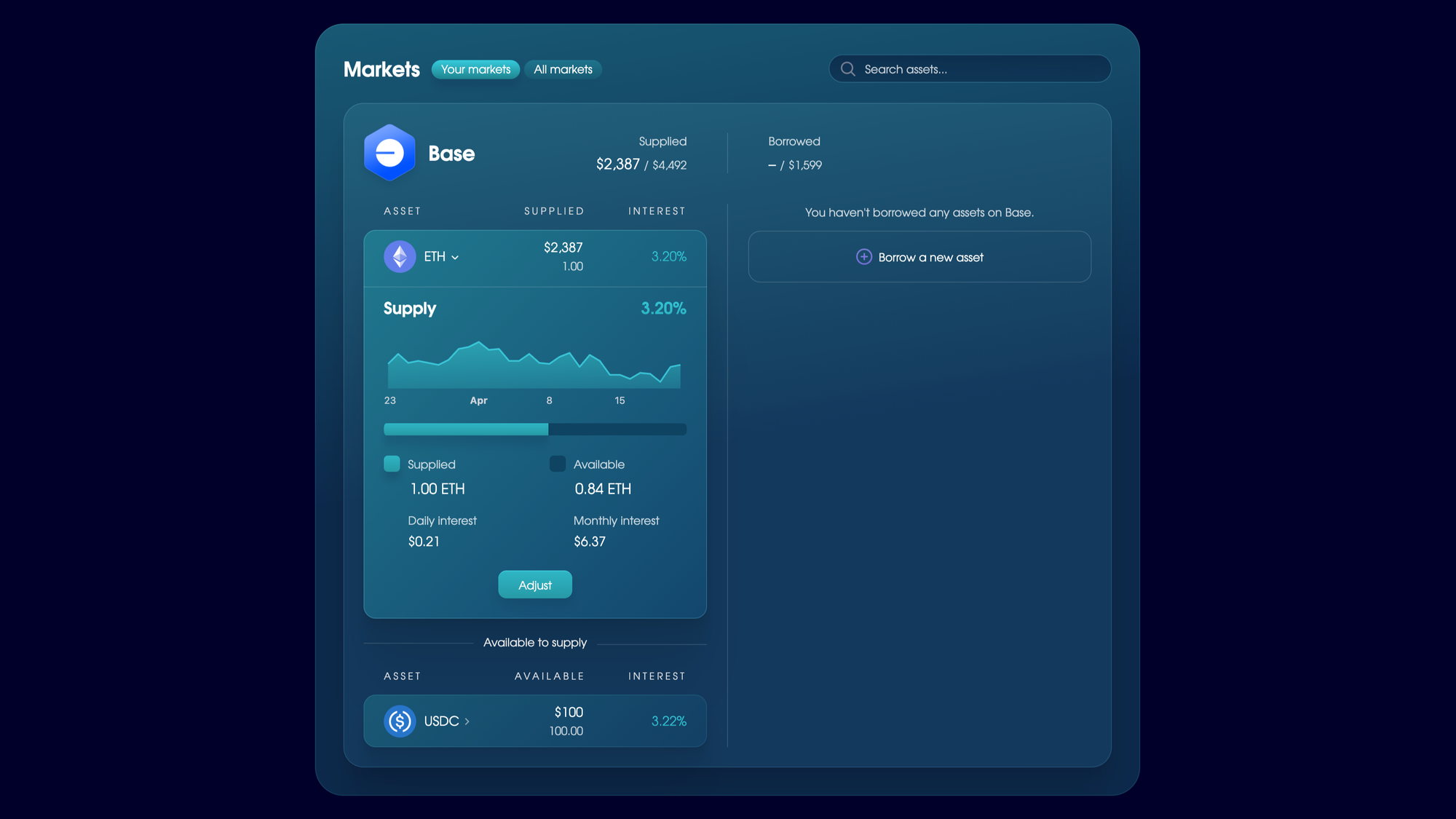
It’s direct, keeps actions in context, and prevents you from getting lost — or abandoning your task in frustration.
But the information required careful curation.
Before you use a money market, there’s one thing you need to know:
How much will you earn or owe?
We get right to the point with weekly/monthly estimates, and as the interest rates vary, the interest history chart shows you whether the current rate is typical or an outlier.
But that’s not all.
A money market should make it easy to assess your actions ahead of time. So ours does.
As you adjust the supply and borrow values, you can preview the interest you’ll generate, how much you can borrow, and how it affects your risk, similar to the bnUSD loan.
The money market updates in real-time to help you preview your actions before you commit.
Onboard with progressive disclosure
Most apps lean heavily on tutorials, interrupt you with “quick tips”, or throw you in the deep end.
An app should be so intuitive that you can use it with confidence — without an instruction manual or elaborate onboarding flow. Most people ignore them anyway.
Our onboarding approach teaches people how to use the app as they use it, without getting in their way.
The key: progressive disclosure.
The original Balanced app was a masterclass in progressive onboarding. Whether your goal was to earn rewards or take out a loan, the message in each section made it clear how to proceed.
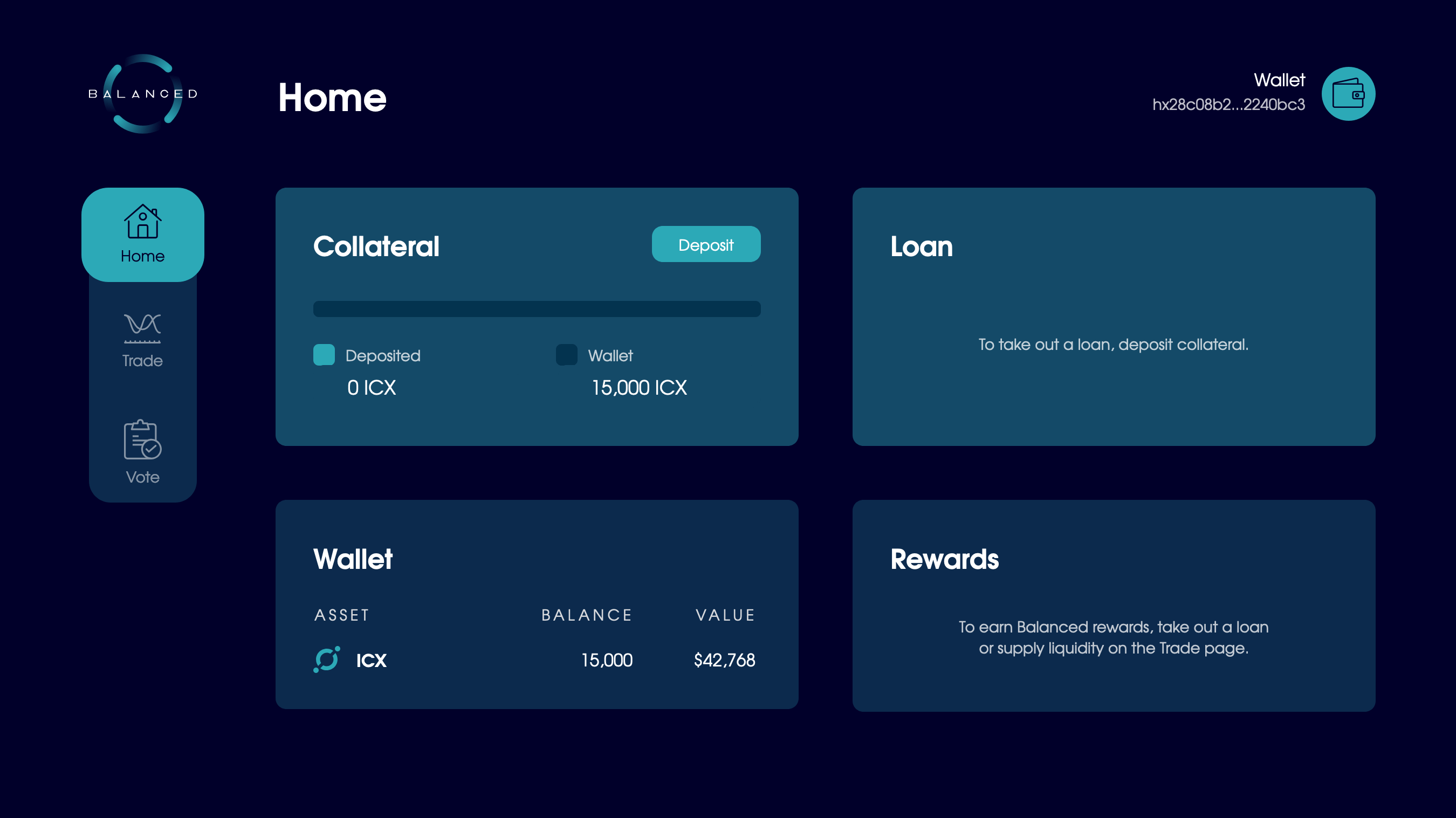
We approached the money market the same way.
First, we designed the steps people would take after they sign in, ready to take action. Only then did we work backwards to convince people to connect their wallet in the first place.
When you first sign in, the interface has a single focus: help you supply an asset.
If you don’t have any compatible assets, we direct your attention to the All Markets tab.
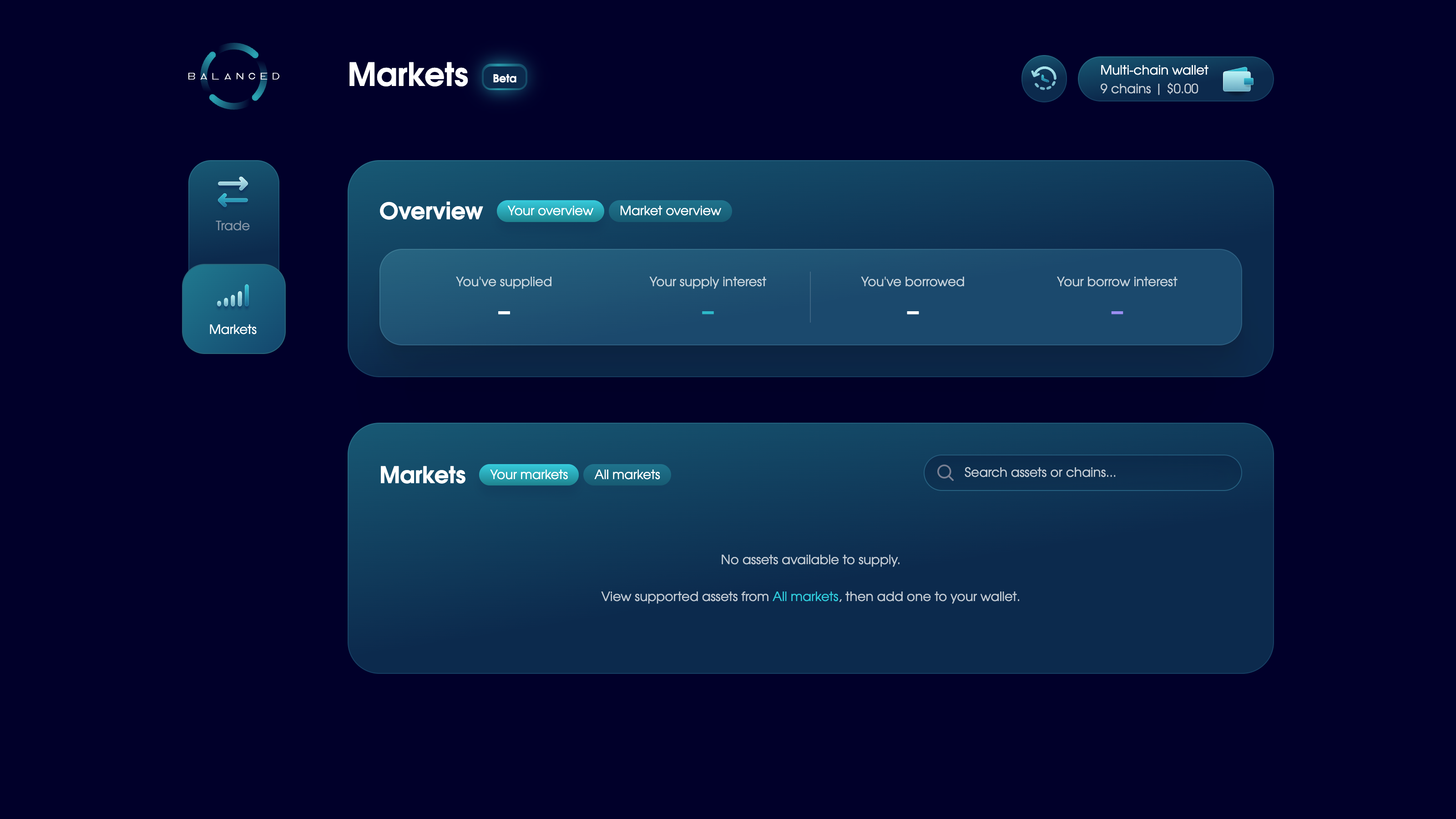
If you do, they’re listed as “available to supply”. And the borrow column gives you a nudge to supply — without getting in your face about it.
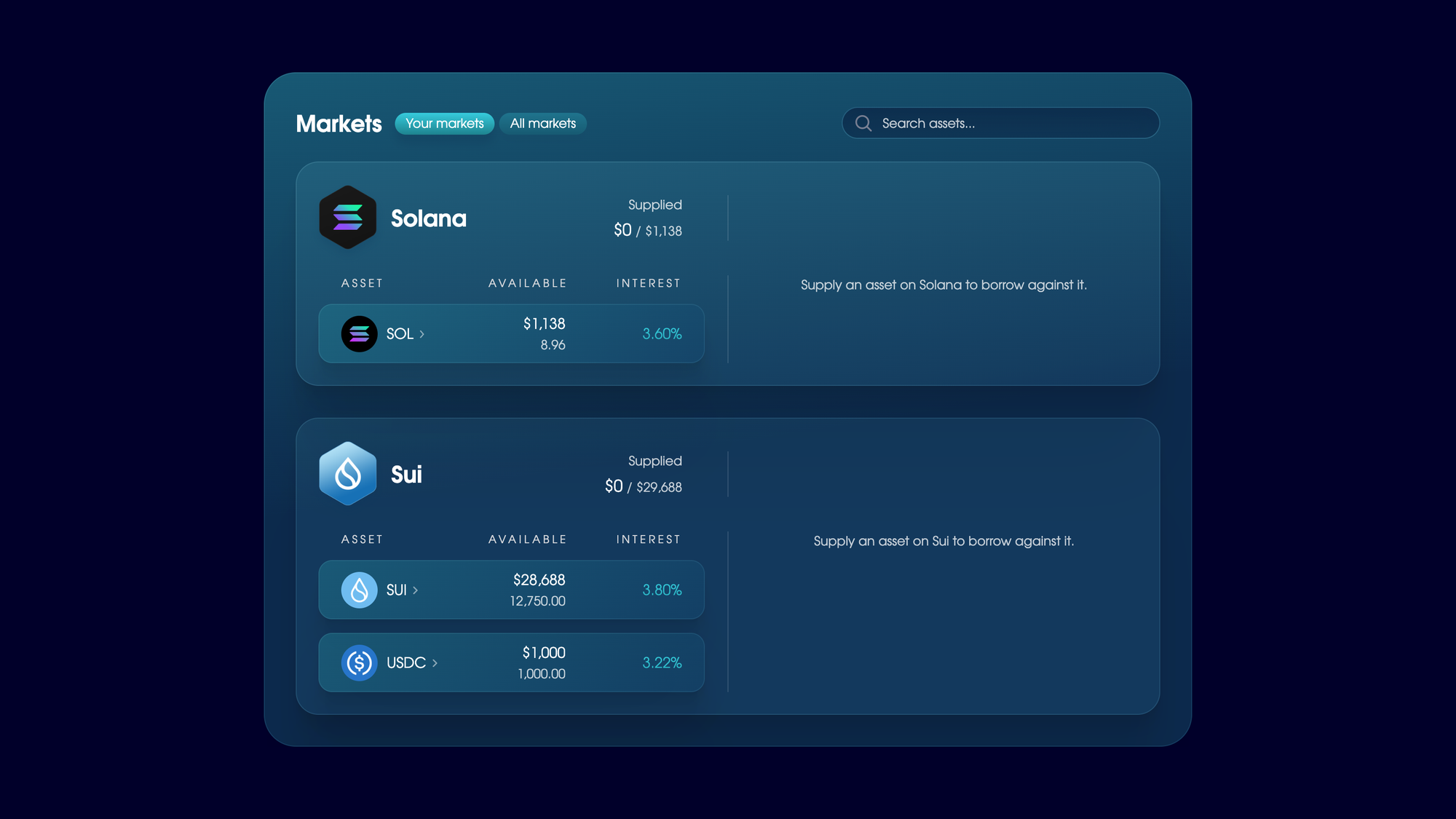
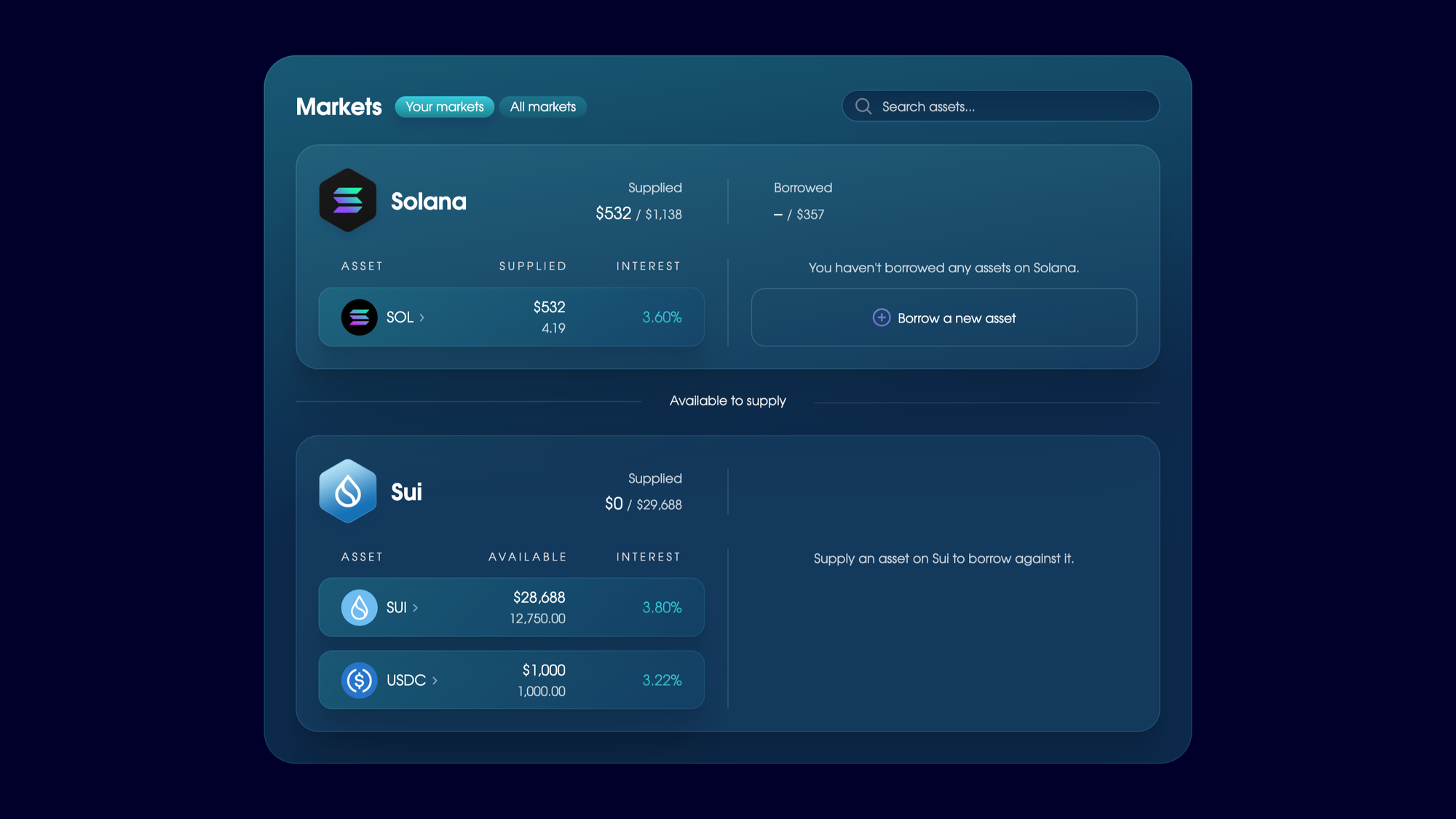
As you supply a Borrowed section appears, with a value that adjusts as you move the slider to reveal your borrow potential.
The interface responds to your adjustments so you can see how much you’ll be able to borrow.
Once complete, the borrow message transforms into a Borrow button. Its presence any earlier (even inactive) would become a click magnet, so we only reveal it when you’re ready to act.
Now for the step that put our flexible layout to the test. The Borrow button expands to reveal a list of every asset you can borrow, alongside the interest rate.
Click an asset and it expands in place, then you can choose which blockchain to receive it on and start borrowing. The Borrowed value adjusts as you move the slider, and a new liquidation risk section will appear.
A list expands from the Borrow button so you can choose an asset without switching context.
After you borrow, the onboarding process is complete. To repay your loan and withdraw your collateral, you follow the same steps in reverse.
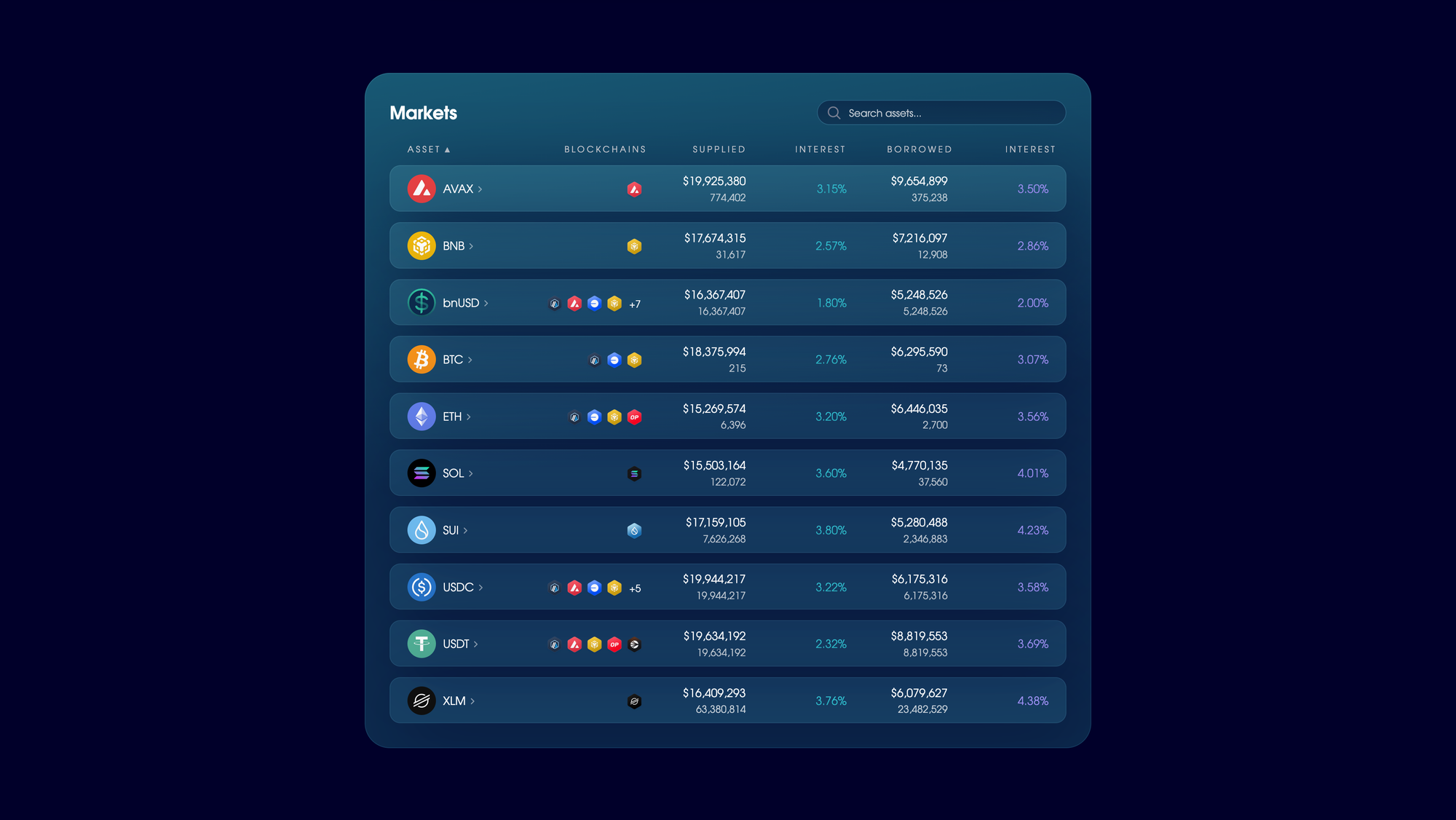
But you can’t do any of that until we’ve convinced you to connect your wallet. That starts with the core money market list — what we call All Markets after you sign in.
At a high level, the All Markets view includes exactly what you’d expect. A list of supported assets, the blockchains they’re available on, the interest to supply and borrow, and the money involved with each.
Click a market and it expands in place to reveal an interest history chart and a calculator to help you assess how much you’ll earn or owe if you participate.
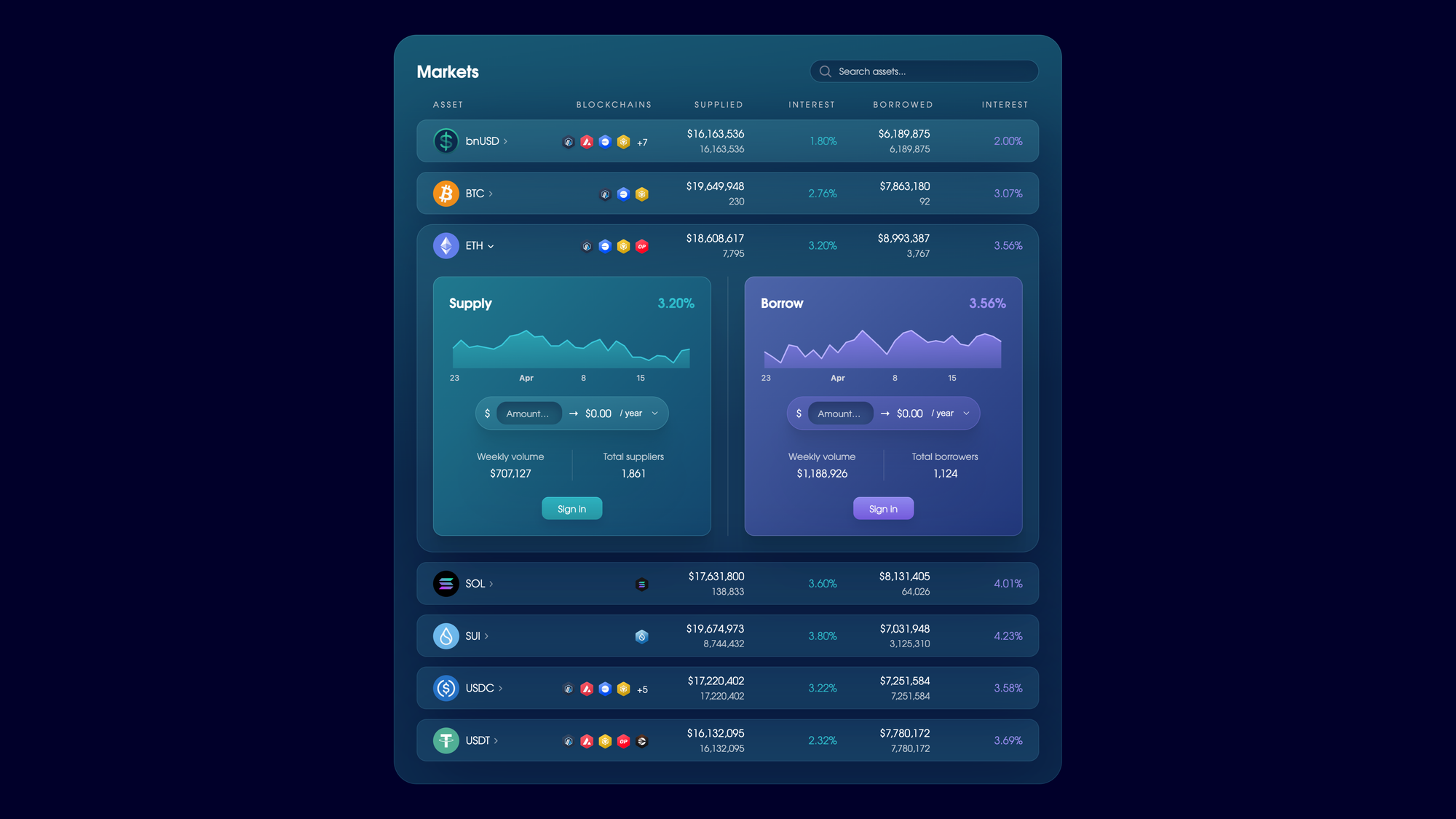
What appears underneath depends on your readiness.
Are you signed in? If not, we prompt you to.
Do you have this asset in your wallet? If not, we prompt you to add it.
Can you borrow this asset? If not, we prompt you to supply first.
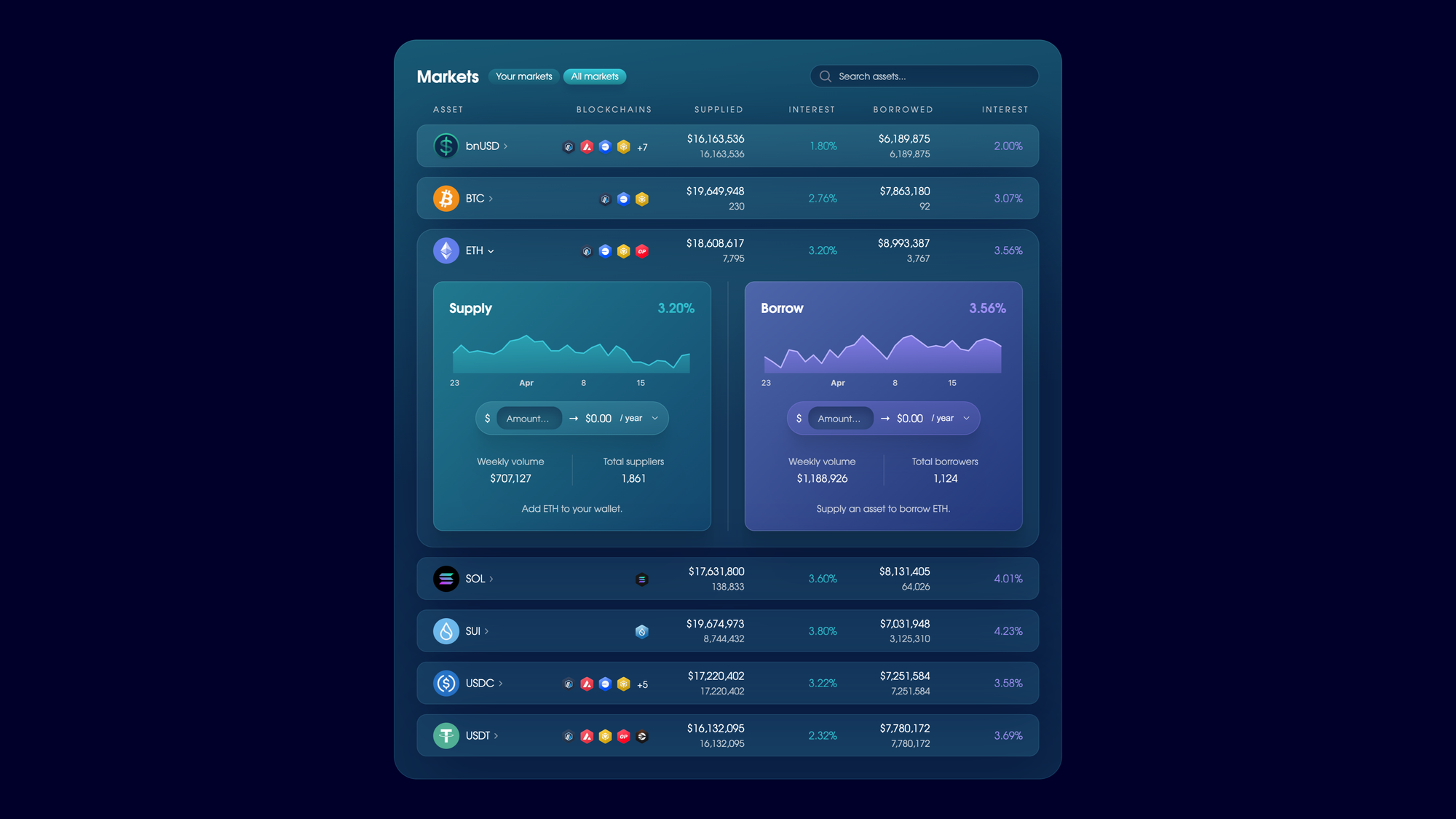
When you’re ready to act, we prompt you to choose a blockchain to supply to or borrow against. After you click the Supply or Borrow button, it pushes you to the Your Markets view under that chain so you have full context of your position during the interaction.
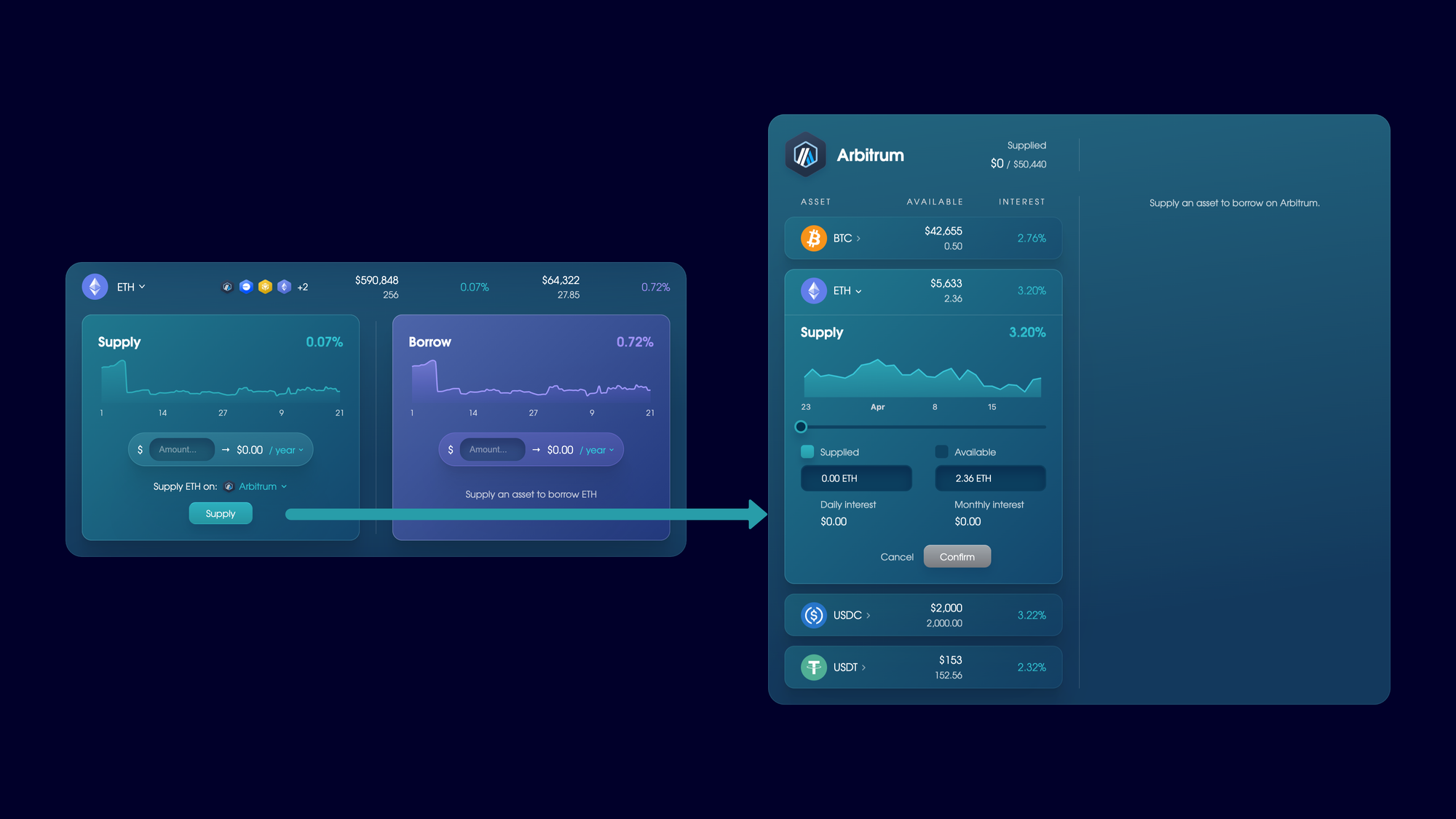
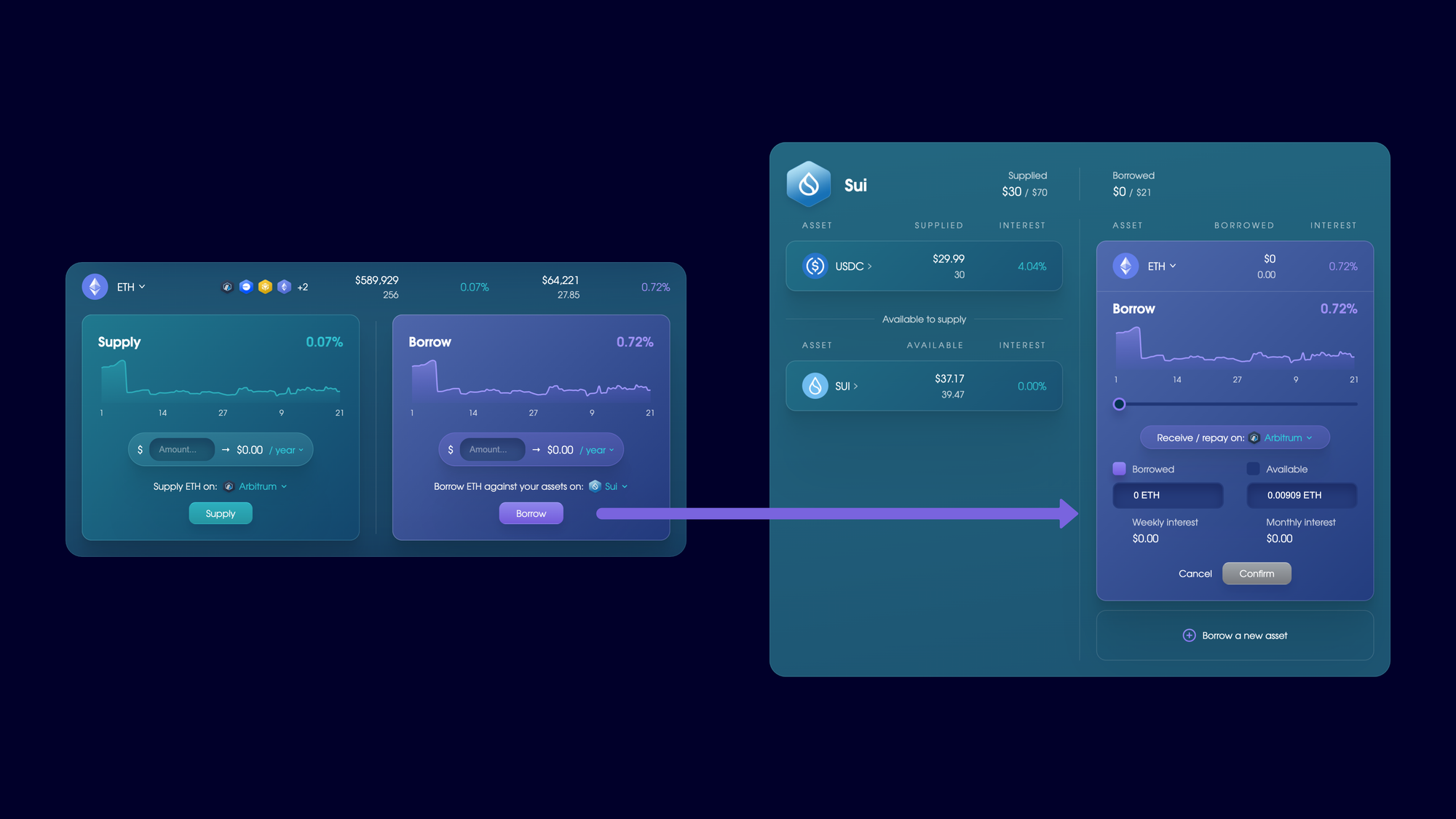
Most of the onboarding flow came together with ease, but we deliberated on the final step for several weeks. We didn’t want to jump people between All Markets and Your Markets, but we could either do that, reveal all position details on the All Markets page, or allow people to act without any context. The position details required excessive duplication that would drown the signal with noise, and operating blind was a recipe for disaster.
Sometimes there is no optimal solution, so in this case we had to settle for the least bad option.
Use colours to improve scan-ability
Most software treats colour like decoration. Something to make an app look nice — or the same as everything else.
We make colour fundamental to every interaction. It guides people through an interface and provides clarity as you scan.
Balanced uses turquoise for interactive elements. It stands out against the navy, draws the eye to look and the mouse to click — even if you don’t bother to read.
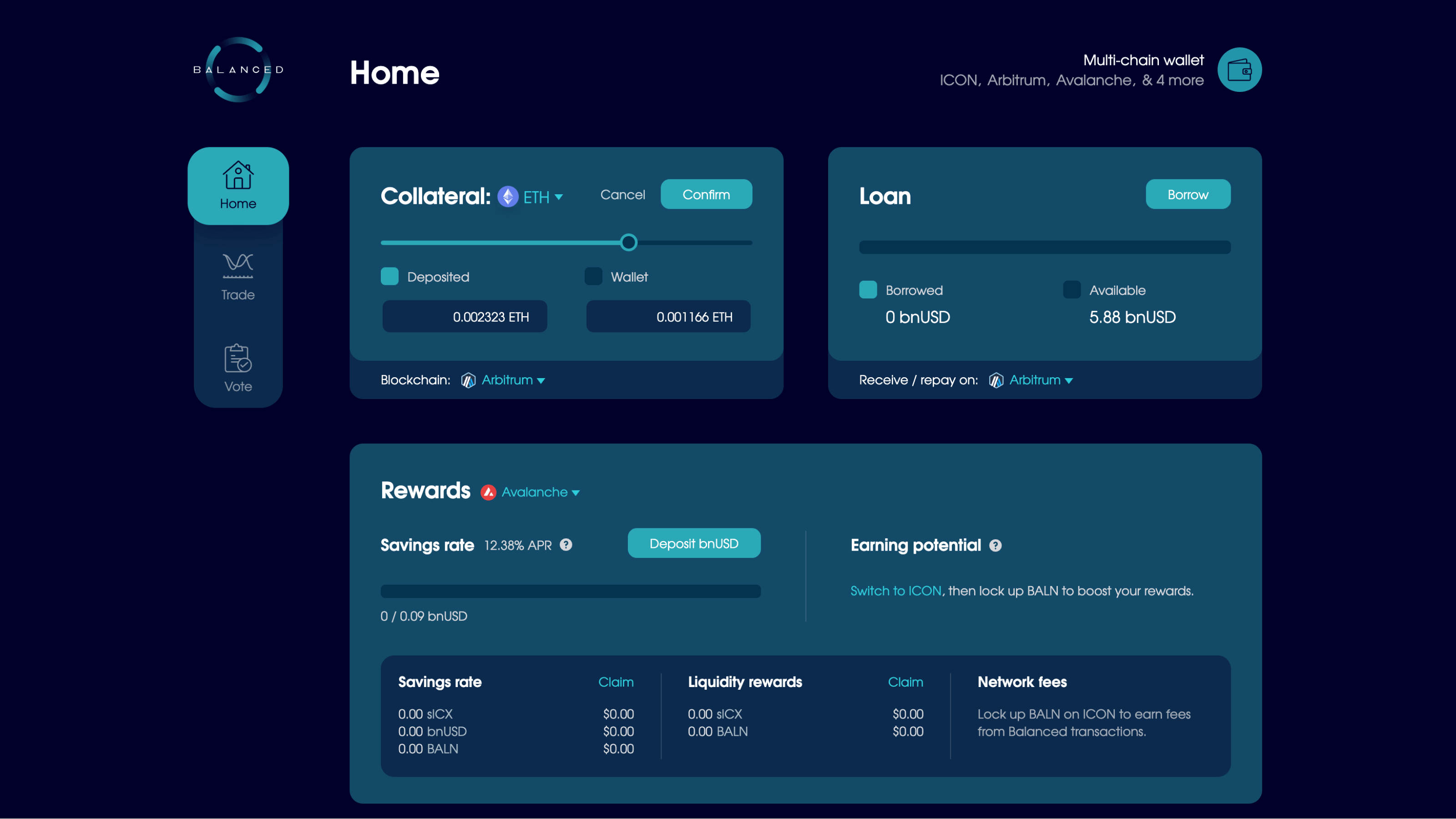
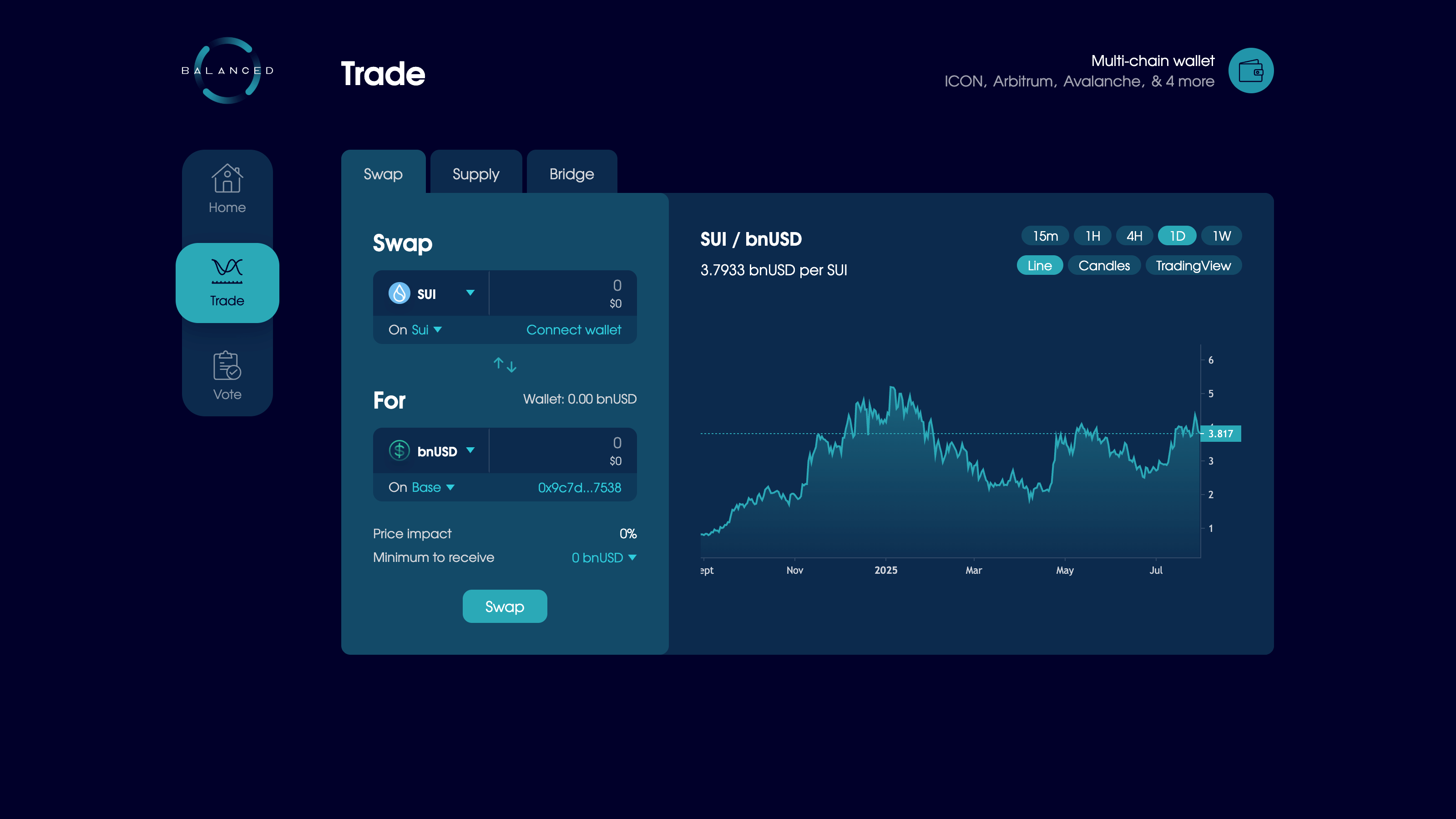
How we applied turquoise to interactive elements in the original Balanced app.
A single action colour keeps the app simple and focused. But the money markets required a different approach.
A money market has two sides: supply and borrow. We could’ve used turquoise for both, but doing so would reduce clarity. Instead, we decided to introduce a second action colour as an interrupt to enhance understanding.
By associating all borrow actions with purple, it’s easier to see at a glance that these interactions are different and come with some risk.
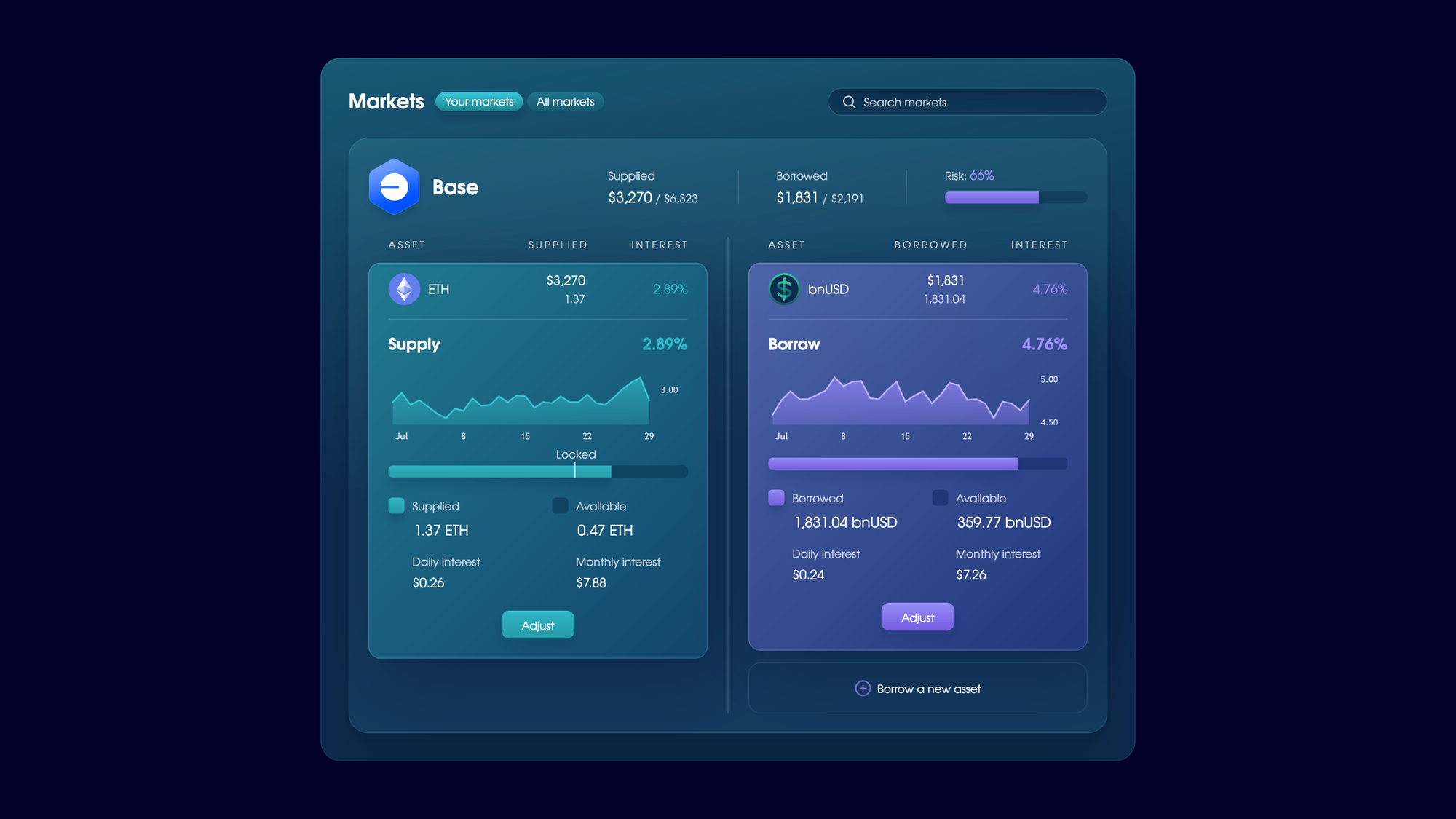
Why not red instead of purple? We use red sparingly throughout the app to make sure its presence always grabs your attention — like when your position is close to liquidation.
Optimise for every device
64% of web traffic comes from mobile devices. One bad mobile experience is enough to stop people coming back, so countless articles and courses instruct designers to focus on mobile first.
We don’t touch mobile until we finalise the desktop design.
You can spot mobile-first design a mile away. It looks inadequate on a larger screen, like an iPhone app stretched to fit on an iPad. When you use the smallest screen size to define the foundations, the result is a desktop experience that’s either too minimal or inconsistent with mobile.
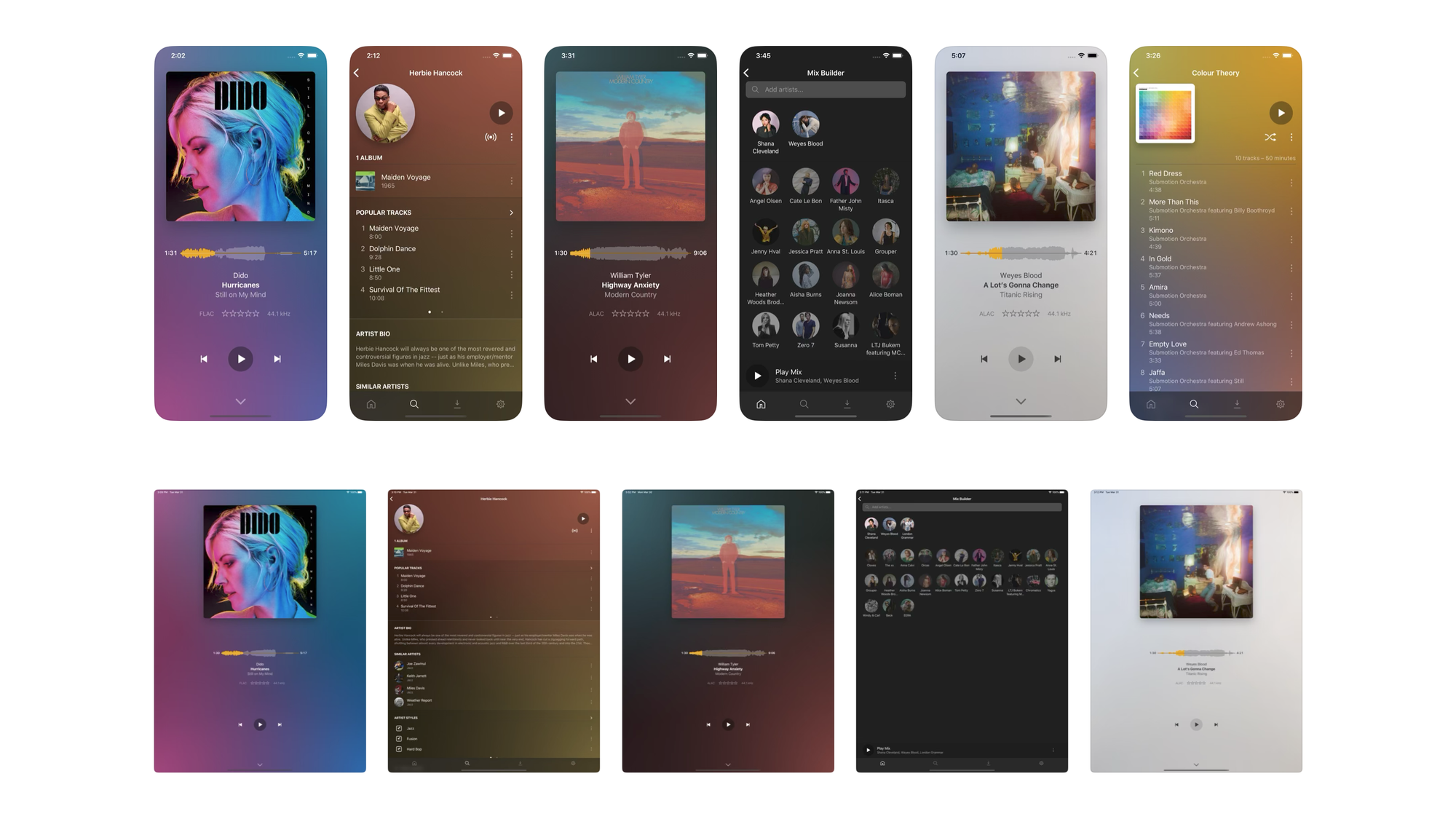
It’s much easier to condense down. We design the full desktop experience, then resize it for smaller screens. Thanks to a flexible codebase this usually isn’t too difficult, but the money markets required a more nuanced approach.
Tables can be a terrible experience on mobile. They require horizontal scrolling, which is often difficult to do or not obvious that you can. And you never quite know how many columns they contain. For our All Markets mobile design, the only way you need to scroll is down.
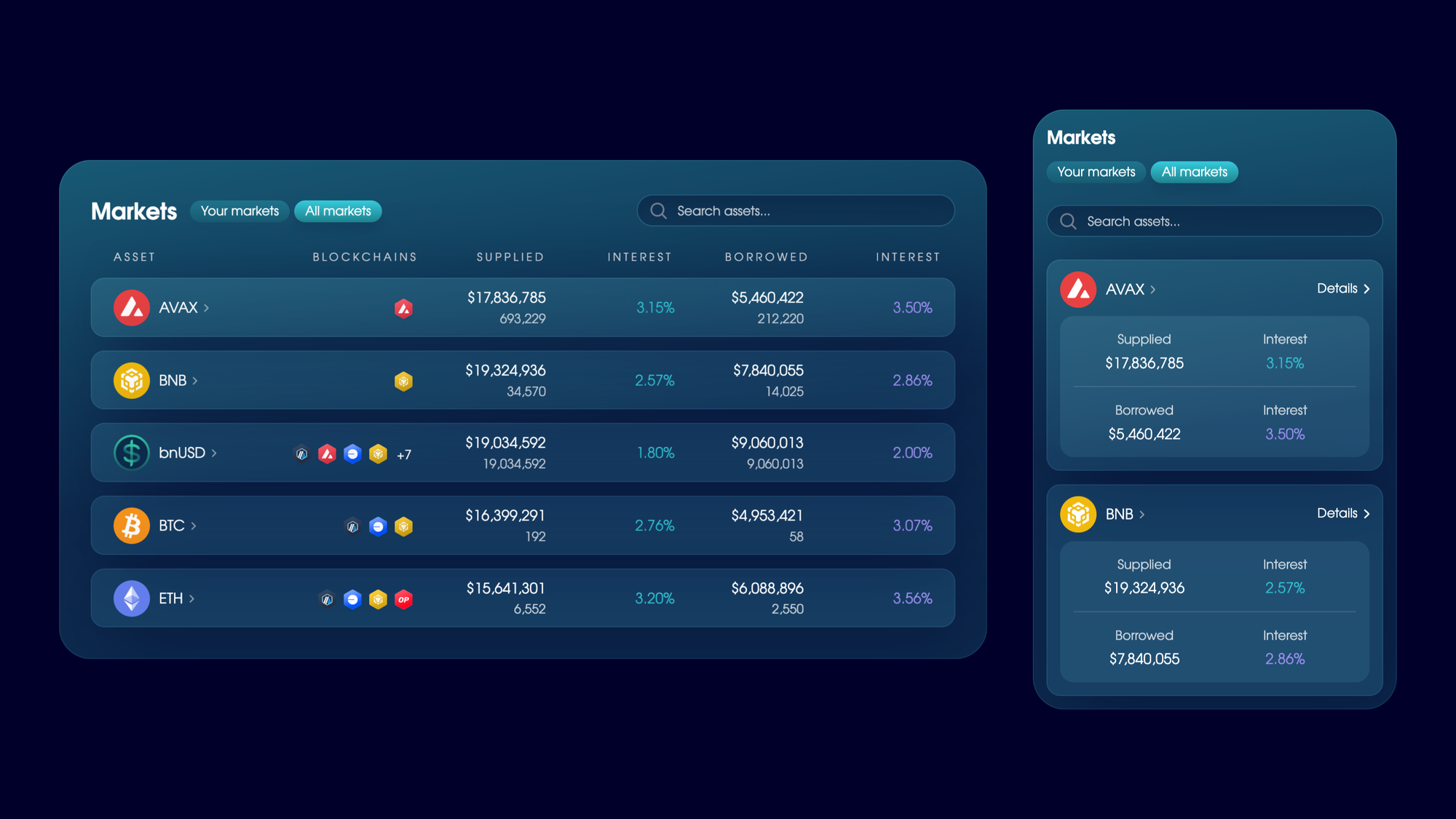
We applied the same style to the Your Markets view, complete with compact chain headers. And we organised the market list under Supply and Borrow tabs, so you can get right to the action you need without losing context of your position.
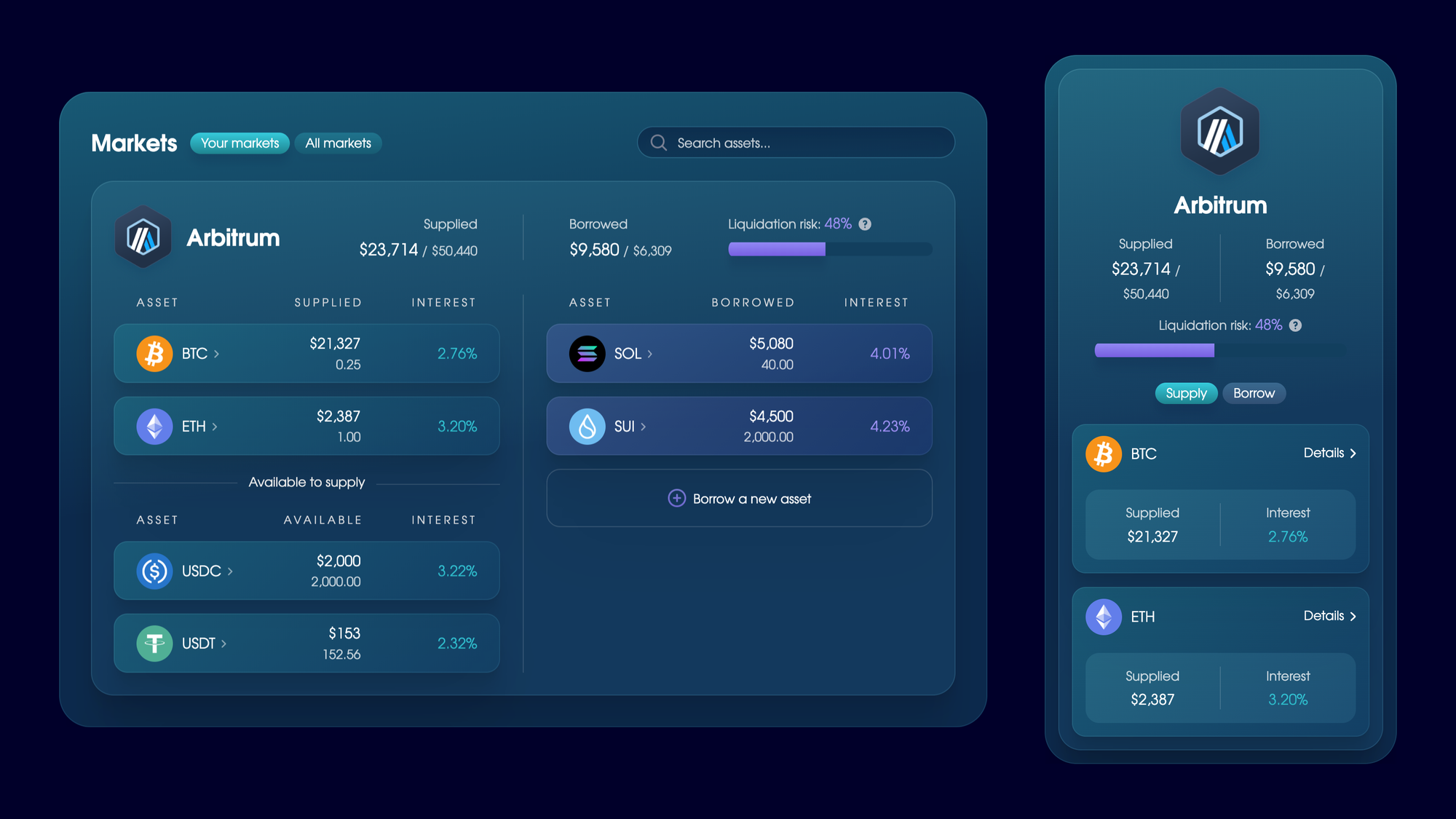
Mobile design shouldn’t be an afterthought. But when you design for mobile first, desktop users suffer. With a flexible desktop design optimised for mobile, you can enjoy a complete and consistent experience no matter which device you use.
Test the hypothesis
We don’t design with our users in mind: we design for ourselves.
If we can satisfy our impossibly high standards, we know we’re on the right track.
But no one had created a money market like this, and we did not want to be the only ones who used it. So after we built an interactive prototype, we shared it with our most engaged users to make sure they found it as intuitive as we did.
Their consistently positive responses reaffirmed that we were on the right track.
Under 2 minutes I tackled the tasks, without any moment doubting what I was doing.
But their videos did reveal a few unexpected yet minor details that caused them to stumble:
- The Recent Activity icon in the top right was mistaken for a refresh button
- Using “receive / repay” instead of “borrow / repay” for the borrow blockchain selector didn’t fit with one tester’s mental model
- The inability to see the risk percentage at all times slowed some down
- The lack of predefined percentage options for the supply/borrow input fields required more intentional adjustments
Other notes were due to things we did not yet have in the prototype but planned to add:
- Table column sorting
- Interest history charts for All Markets
- Support for the European decimal format
We addressed all issues flagged during testing, except for one which we thoughtfully dismissed. Feedback is valuable and comes from a good place, but you need a good filter to keep the quality high.
Ship the feature
On April 7, 2026, we launched the money markets in a brand new version of Balanced.
Here’s the full feature in action:
An unedited video of the live supply and borrow experience.
Overall, we’re happy with where it ended up. It’s fast, easy to use, and the money market style transformed the app from utilitarian to aesthetically pleasing.
But we’re not easily satisfied, so here are some of the many improvements we still want to make:
- Show the amount you have available to supply for a market you’ve already participated in
- Use several design patterns more consistently
- Improve the modal design for borrow and pending transactions
And of the feedback that rolled in from early users, there was one thing we leapt to improve:
The lack of a liquidation price, which caused our existing users to hesitate.
Due to the multi-asset nature of a money market we couldn’t provide the liquidation price in every situation, but you can now see your liquidation price if you use the money market with stablecoins and a single volatile asset.
The liquidation price provides more clarity than a percentage ever could.
The Balanced money market design required several months of intense consideration. And then several more to build, test, and refine.
But it was worth it to create the first well-designed money market that’s as easy to use on one blockchain as it is on many.
We’ve searched far and wide, but we have not found another money market that even comes close. If you do, we’d love to hear about it.